Tag Archives: venezuela

Turkey’s Venezuela Test: Solidarity Talk and Power Politics

This piece was published at PSA Blog. See the original link here.
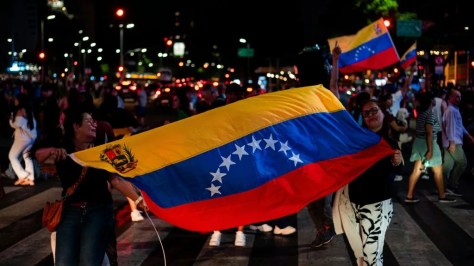
The capture of Nicolás Maduro has exposed the limits of Ankara’s performative alliances and the constraints facing middle powers in an increasingly volatile international order.

On January 3, 2026, US special forces carried out a dramatic military operation in Caracas, capturing Venezuelan President Nicolás Maduro and his wife, Cilia Flores, and transporting them to the United States, where they now face federal charges. Dubbed “Operation Absolute Resolve,” the raid represented a US intervention in Latin America on a scale not seen for decades. The Trump administration justified the operation by citing longstanding allegations of Maduro’s involvement in drug trafficking and narco-terrorism, yet the action immediately raised serious questions about national sovereignty, international law, and the unilateral use of force.

For Turkey, however, the episode carried significance that extended well beyond these legal and normative debates. It directly tested a foreign policy relationship that the ruling Justice and Development Party (AKP) has cultivated since 2016, largely through the language of solidarity and shared political grievance. The detention of a leader repeatedly described by President Recep Tayyip Erdoğan as a “brother” forced Ankara to confront the tension between rhetorical alignment and strategic constraint.

From 2016 to the Present: A Relationship Built on “Anti-Coup” Discourse

The failed coup attempt in Turkey in July 2016 marked a decisive turning point in Turkey–Venezuela relations, not simply by deepening bilateral ties but by anchoring them in a shared political narrative. At a moment when many Western leaders responded cautiously to developments in Turkey, Maduro was among the first to call President Erdoğan and express unequivocal support. Turkish Foreign Minister Mevlüt Çavuşoğlu later described this gesture as unforgettable, and it became the symbolic cornerstone of a rapidly expanding relationship. For Ankara, Venezuela was elevated from a distant partner to a political ally within a broader discourse opposing coups, external interference, and what Turkish officials increasingly portrayed as Western double standards.

Over time, this alignment evolved into a distinctly performative partnership. Maduro’s continuous public praise of Erdoğan as a leader who stood with the world’s oppressed helped cultivate an image of ideological affinity that went well beyond conventional diplomacy. Through repeated invocations of “democracy against coups,” the relationship was framed as morally principled and value-driven rather than narrowly transactional. This performative solidarity reinforced the sense of a shared political identity and mutual recognition.

Yet symbolism alone did not fully account for the relationship’s durability. It was accompanied by a set of politically salient economic and strategic ties. In 2017, as many international airlines withdrew from Venezuela, Turkish Airlines became one of the few carriers to initiate flights to Caracas. Turkey also emerged as a supplier for Venezuela’s CLAP food subsidy programme. Bilateral trade peaked in 2018, reaching over $1.1bn. Gold trade, in particular, provided a channel through which actors linked to the Maduro government sought to mitigate the effects of international sanctions, with Turkey importing approximately $900 million worth of Venezuelan gold in 2018. Turkish officials and business groups articulated ambitious trade targets, including aspirations to raise annual trade to $5 billion. These exchanges and intentions were not insignificant, but they fell short of the scale and depth of Turkey’s more developed economic partnerships, providing limited institutional substance to a relationship otherwise driven by political symbolism.

A Fast Break

Maduro’s capture abruptly tested this relationship. Turkish officials characterised the US operation as contrary to international law and warned it could deepen Venezuela’s instability. Notably, however, Ankara stopped short of outright condemnation of the United States or any concrete diplomatic response. The language was measured, cautious, and calibrated to avoid escalation.

This restraint exposed a deeper tension at the core of Turkish foreign policy. AKP elites have long presented themselves as principled opponents of externally imposed regime change, framing this stance as a defining element of Turkey’s international identity. At the same time, relations with the United States remain a central strategic constraint, sharply limiting the scope for sustained solidaristic positioning. Maduro’s detention underscored how quickly partnerships built on rhetorical solidarity can be unsettled when confronted with the realities of hard power.

Turkey’s opposition was quick to seize on this tension. Republican People’s Party leader Özgür Özel recalled President Erdoğan’s post-2016 language of brotherhood towards Maduro, presenting Ankara’s current caution as evidence of an unwillingness to antagonise Donald Trump. The criticism sought to expose a gap between the government’s long-standing anti-coup rhetoric and its restrained response in practice. From the government side, however, Burhanettin Duran, Turkey’s Presidential Director of Communications, pushed back by arguing that foreign policy should be guided by sober state interests rather than emotional or bombastic slogans. The exchange laid bare a familiar fault line in Turkish foreign policy: the recurring tension between principled discourse and pragmatic calculation when external power constraints assert themselves.

The Way Ahead

Overall, Maduro’s capture laid bare Turkey’s difficulty in converting symbolic friendship into sustained solidarity. More broadly, the trajectory of the Turkey–Venezuela relationship illustrates the limits of populist rhetoric in foreign policy, as politically performative alignments tend to give way to pragmatism when power balances shift abruptly. Going forward, the Turkish government is likely to recalibrate its engagement with Venezuela towards a lower-profile, more cautious, and selectively transactional relationship, avoiding overt political identification while preserving limited channels of interaction. In this sense, Ankara’s response to events in Venezuela illustrates how middle powers are compelled to navigate between normative posturing and strategic restraint in an international system increasingly shaped by power asymmetries and sudden geopolitical disruption.
Maduro consolidates hold on power as Venezuela’s opposition boycotts elections

Begum Zorlu, City St George’s, University of London

Venezuela’s ruling party romped to victory in regional and legislative elections on May 25, winning over 82% of votes cast for the national assembly. The government-controlled national electoral council said candidates for the United Socialist Party of Venezuela (PSUV) won the race for governor in 23 out of the country’s 24 states.

These elections saw a turnout possibly as low as 25% amid a partial opposition boycott. They were the first held since July 2024, when Nicolás Maduro secured a third consecutive term as Venezuela’s president in a vote that was condemned internationally as fraudulent.

One thing that stood out in that 2024 election was the ability of the opposition to mount a credible challenge. Their unified backing of Edmundo González as the presidential candidate, and the systematic gathering of evidence of electoral fraud from polling stations, reflected organisational strength and a coherent strategy.

However, that unity has since eroded. Protests against the 2024 result were met with a harsh government crackdown which included killings and mass detentions. Subsequently, Venezuela’s opposition became deeply divided over whether to participate in the most recent elections.

Veteran opposition leader María Corina Machado, who was barred from running for the presidency and has been in hiding since July, called on her supporters to boycott them. She said that participating would only serve to legitimise Maduro’s electoral fraud.

In contrast, a faction led by two-time presidential candidate Henrique Capriles viewed participation as an opportunity to reclaim political space. Capriles framed electoral participation as a form of protest, arguing that abstention only serves to strengthen Maduro.

Capriles claimed that victory in the 2015 parliamentary elections, which saw opposition parties win two-thirds of the seats in the national assembly, had been made possible by unity – whereas the decision by most of the opposition not to participate in the 2018 presidential election had effectively handed Maduro power.

In the May 2025 elections, Capriles and his supporters actively campaigned to encourage voter turnout – while the Machado camp accused those participating of cooperating with the Maduro regime. The debate was marked by accusations of betrayal and a lack of dialogue.

Learning from failures

Venezuela’s opposition parties have boycotted elections on several occasions over the past 25 years, as the government has tightened its authoritarian grip. But the decision has often had damaging consequences.

The most consequential boycott was in 2005, when a broad coalition of opposition parties withdrew from elections to the national assembly, citing concerns about voting irregularities and media bias. The move backfired.

The government, then led by Maduro’s PSUV predecessor Hugo Chávez, did not face international backlash. It won every seat and gained a supermajority that enabled constitutional changes, including expanded executive powers. The opposition lost its institutional foothold to challenge legislation.

The boycott also deepened internal rifts within Venezuela’s opposition. It entrenched the divide between moderates who favoured political engagement and hardliners who were sceptical of participation. These divisions have persisted to this day.

Opposition movements elsewhere have boycotted elections too, and the consequences have been similar. In 2014, the main opposition party in Bangladesh abstained from general elections in an attempt to delegitimise the ruling Awami League’s hold on power and prompt an international response.

In fact, this handed the Awami League near-total control of parliament. With no sustained international pressure, it contributed to the country’s authoritarian consolidation.

Such cases demonstrate that electoral boycotts pose a dilemma for opposition movements. By refusing to participate, they may unintentionally strengthen authoritarian rule by ceding space to incumbents and weakening their own unity.

Research shows that an electoral boycott is likely to be most effective when three conditions align: the ruling regime is vulnerable, the opposition is united, and the international context is favourable. These conditions have consistently been absent in Venezuela.

Its slide towards authoritarianism has been underpinned by the stability of the Maduro regime since 2013. His government has been able to rely on sustained military support and has used repression strategically to tighten its grip on power.

A lack of unity within the opposition has also worked to the regime’s advantage. In their work on Venezuela’s authoritarian trajectory, researchers Maryhen Jiménez and Antulio Rosales demonstrate that partial electoral boycotts have repeatedly failed to produce meaningful change. This is, in their view, due to the absence of a coordinated opposition strategy.

An uncoordinated strategy also risks fostering a sense of “defeatism” among regime critics. This can hamper people’s willingness to take collective action in the future.

Participation in authoritarian elections, even though they are not fair, can still expose underlying vulnerabilities within a ruling regime. Opposition mobilisation ahead of Venezuela’s 2024 election placed the Maduro government under significant pressure. It responded with electoral manipulation.

Evidence of voter fraud provoked international condemnation, including from Brazil and Colombia. These two countries had previously been more cautious in their criticism of the Maduro government.

This further isolated Maduro on the international stage. But condemnation was not accompanied by a sustained or coordinated international strategy to support mediation or political transition in Venezuela.

The road ahead

Whether the opposition can regain coherence and unity remains to be seen. But even if it can, authoritarianism in Venezuela appears firmly entrenched.

The national electoral council’s refusal to release vote tallies following the 2024 election, alongside an intensified crackdown on dissent, reflects a deepening consolidation of power. It is also evidence of Maduro’s declining concern with maintaining even a facade of democratic legitimacy.

In the absence of internal cohesion within Venezuela’s opposition, this authoritarian consolidation is likely to deepen. This will leave even fewer institutional footholds from which the opposition can mount a credible democratic challenge.

Begum Zorlu, ESRC Research Fellow in the Department of International Politics, City St George’s, University of London

This article is republished from The Conversation under a Creative Commons license. Read the original article.

Populism and Elections in Venezuela: A Conversation with Tamara Adrian

With contested vote counts, repression, and international calls for transparency, Venezuela exemplifies the challenges faced by democracies in an era of rising populism. In this podcast we host Tamara Adrián, an opposition activist who offers unique insights into populist and repressive strategies employed by the Venezuelan regime.

In the first episode of the podcast series “Voices on Global Populism”, we explore Venezuela’s contested elections held this summer, analysing the populist strategies at play and their broader implications for global populist trends.

The episode focuses on the electoral process that Venezuela undertook in the last year. On October 2023, Venezuelan President Nicolás Maduro reached an agreement with the opposition to pave the way for free and fair presidential elections. As part of the agreement, the regime committed to following democratic measures such as allowing international observers, while the United States pledged to ease certain economic sanctions. The opposition selected María Corina Machado as its candidate after she achieved a victory in the primaries.

However, just three months later, Venezuela’s Supreme Court—largely dominated by regime supporters—declared Machado ineligible to run, citing past financial irregularities. Consequently, a little-known candidate Edmundo González was chosen to run as the opposition candidate against Maduro.

The elections held in July further exacerbated Venezuela’s political crisis. While Nicolás Maduro declared victory, his government did not release a full and transparent vote count. Opposition activists who gathered electoral data from polling stations, encompassing over 83% of the voting tallies, exposed a significant disparity with the official narrative. According to this data, Maduro secured only 30% of the vote, compared to an overwhelming 67% for opposition candidate Edmundo González.

Despite calls for transparency from the United States, the European Union, and left-wing Latin American nations such as Brazil and Colombia, Venezuela’s National Electoral Council declared Maduro the winner without releasing disaggregated vote tallies.

The contested election triggered widespread protests and a wave of government repression. The United Nations human rights investigators have accused Maduro’s government of orchestrating a brutal crackdown highlighting widespread violence, including the detention of minors, fatalities—and the targeting of protests and online critics. While González has an arrest warrant and has fled to exile in Spain, the crackdown continues today.

To discuss these dynamics, as well as the broader theme of populism in Venezuela, we hosted opposition activist Tamara Adrián. Since the early 2000s, Tamara has been a prominent figure in Venezuela’s political landscape. She is the founder and director of Diversity and Equality Through Law and her activism spans across Latin America and beyond. She has collaborated with the International Lesbian, Gay, Bisexual, Trans, and Intersex Association and served as a special adviser on human rights for both the Pan American Health Organization and the World Health Organization. Also importantly, she is Venezuela’s first transgender member of parliament.

Below are some of the core points she underlines in the podcast. To see the full episode click here.

“The Elections Were Not Fair”

Tamara has raised a critique of Venezuela’s recent elections and the political climate under Nicolás Maduro. While she acknowledged the elections were legitimate, she argued they were fundamentally unfair. She commended the impressive organization and commitment of citizens, who served as witnesses at voting centers, ensuring transparency by securing certified copies of results, safeguarded with advanced security features. However, the aftermath of the elections reveals a picture of repression and fear.

Repression and Political Prisoners

Following the elections, over 2,000 people were imprisoned for protesting or participating in opposition groups. Many detainees were denied basic rights such as legal representation, family visits, or fair trials, leaving them isolated. Tamara underlined that currently, 1,963 political prisoners remain, despite the release of some detainees after international pressure, notably from the International Criminal Court. Yet, many remain vulnerable to re-arrest.

She also highlighted the oppressive tactics of Maduro’s regime, such as “Operation Knock Knock,” which involved sudden arrests targeting dissidents or even their family members to force compliance. This climate of fear has driven 2,000–3,000 activists into hiding or exile. Over 100 opposition politicians, spanning the political spectrum, remain imprisoned.

Public Sentiment and International Response

According to Tamara, despite the suppression, public sentiment overwhelmingly opposes Maduro. Recent surveys she mentions show 87% of the population supports the opposition, and 90–92% believe opposition candidate Edmundo González won the election.

She also acknowledged the international community’s limited ability to pressure autocratic regimes like Maduro’s. While sanctions and diplomatic efforts have been employed, they have not yield significant results. She also noted the regime’s reliance on allies like Cuba, Russia, and Turkey, which help sustain its autocratic grip.

The Role of Populism and Militarization

Tamara described how the rise of Hugo Chávez was built on populist foundations which she argued were marked by oil revenues. However, declining oil revenues and economic mismanagement have eroded his ability to deliver such benefits. In the discussion we came to a conclusion that the regime now depends heavily on military loyalty, fear tactics, and international alliances.

The Road Ahead

Tamara argued that Maduro’s imminent swearing-in as president in January, backed by the military, could mark Venezuela’s full transition into autocracy. However despite the challenges, Tamara is determined to continue her activism. Inspired by historical figures like Nelson Mandela, she said, she believes in the power of action against injustice. “When you cannot accept the state of things, you have to act,” she said, underscoring her commitment to go on.

December, 2, 2024

Begum Zorlu

This conversation is part of a podcast series exploring the influence of populism on both global and domestic politics in an age of global disorder, where shifting alliances, economic instability, and geopolitical conflicts continue to reshape the political landscape. These evolving dynamics are crucial to understanding how populism shapes struggles for democracy, gender justice, and prospects for political change. It is a part of the author’s ESRC Postdoctoral Fellowship in partnership with the SES Equality and Solidarity Association.