Tag Archives: history

Turkey’s Venezuela Test: Solidarity Talk and Power Politics

This piece was published at PSA Blog. See the original link here.
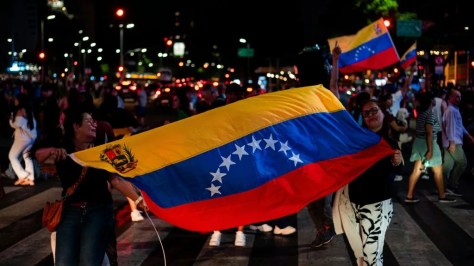
The capture of Nicolás Maduro has exposed the limits of Ankara’s performative alliances and the constraints facing middle powers in an increasingly volatile international order.

On January 3, 2026, US special forces carried out a dramatic military operation in Caracas, capturing Venezuelan President Nicolás Maduro and his wife, Cilia Flores, and transporting them to the United States, where they now face federal charges. Dubbed “Operation Absolute Resolve,” the raid represented a US intervention in Latin America on a scale not seen for decades. The Trump administration justified the operation by citing longstanding allegations of Maduro’s involvement in drug trafficking and narco-terrorism, yet the action immediately raised serious questions about national sovereignty, international law, and the unilateral use of force.

For Turkey, however, the episode carried significance that extended well beyond these legal and normative debates. It directly tested a foreign policy relationship that the ruling Justice and Development Party (AKP) has cultivated since 2016, largely through the language of solidarity and shared political grievance. The detention of a leader repeatedly described by President Recep Tayyip Erdoğan as a “brother” forced Ankara to confront the tension between rhetorical alignment and strategic constraint.

From 2016 to the Present: A Relationship Built on “Anti-Coup” Discourse

The failed coup attempt in Turkey in July 2016 marked a decisive turning point in Turkey–Venezuela relations, not simply by deepening bilateral ties but by anchoring them in a shared political narrative. At a moment when many Western leaders responded cautiously to developments in Turkey, Maduro was among the first to call President Erdoğan and express unequivocal support. Turkish Foreign Minister Mevlüt Çavuşoğlu later described this gesture as unforgettable, and it became the symbolic cornerstone of a rapidly expanding relationship. For Ankara, Venezuela was elevated from a distant partner to a political ally within a broader discourse opposing coups, external interference, and what Turkish officials increasingly portrayed as Western double standards.

Over time, this alignment evolved into a distinctly performative partnership. Maduro’s continuous public praise of Erdoğan as a leader who stood with the world’s oppressed helped cultivate an image of ideological affinity that went well beyond conventional diplomacy. Through repeated invocations of “democracy against coups,” the relationship was framed as morally principled and value-driven rather than narrowly transactional. This performative solidarity reinforced the sense of a shared political identity and mutual recognition.

Yet symbolism alone did not fully account for the relationship’s durability. It was accompanied by a set of politically salient economic and strategic ties. In 2017, as many international airlines withdrew from Venezuela, Turkish Airlines became one of the few carriers to initiate flights to Caracas. Turkey also emerged as a supplier for Venezuela’s CLAP food subsidy programme. Bilateral trade peaked in 2018, reaching over $1.1bn. Gold trade, in particular, provided a channel through which actors linked to the Maduro government sought to mitigate the effects of international sanctions, with Turkey importing approximately $900 million worth of Venezuelan gold in 2018. Turkish officials and business groups articulated ambitious trade targets, including aspirations to raise annual trade to $5 billion. These exchanges and intentions were not insignificant, but they fell short of the scale and depth of Turkey’s more developed economic partnerships, providing limited institutional substance to a relationship otherwise driven by political symbolism.

A Fast Break

Maduro’s capture abruptly tested this relationship. Turkish officials characterised the US operation as contrary to international law and warned it could deepen Venezuela’s instability. Notably, however, Ankara stopped short of outright condemnation of the United States or any concrete diplomatic response. The language was measured, cautious, and calibrated to avoid escalation.

This restraint exposed a deeper tension at the core of Turkish foreign policy. AKP elites have long presented themselves as principled opponents of externally imposed regime change, framing this stance as a defining element of Turkey’s international identity. At the same time, relations with the United States remain a central strategic constraint, sharply limiting the scope for sustained solidaristic positioning. Maduro’s detention underscored how quickly partnerships built on rhetorical solidarity can be unsettled when confronted with the realities of hard power.

Turkey’s opposition was quick to seize on this tension. Republican People’s Party leader Özgür Özel recalled President Erdoğan’s post-2016 language of brotherhood towards Maduro, presenting Ankara’s current caution as evidence of an unwillingness to antagonise Donald Trump. The criticism sought to expose a gap between the government’s long-standing anti-coup rhetoric and its restrained response in practice. From the government side, however, Burhanettin Duran, Turkey’s Presidential Director of Communications, pushed back by arguing that foreign policy should be guided by sober state interests rather than emotional or bombastic slogans. The exchange laid bare a familiar fault line in Turkish foreign policy: the recurring tension between principled discourse and pragmatic calculation when external power constraints assert themselves.

The Way Ahead

Overall, Maduro’s capture laid bare Turkey’s difficulty in converting symbolic friendship into sustained solidarity. More broadly, the trajectory of the Turkey–Venezuela relationship illustrates the limits of populist rhetoric in foreign policy, as politically performative alignments tend to give way to pragmatism when power balances shift abruptly. Going forward, the Turkish government is likely to recalibrate its engagement with Venezuela towards a lower-profile, more cautious, and selectively transactional relationship, avoiding overt political identification while preserving limited channels of interaction. In this sense, Ankara’s response to events in Venezuela illustrates how middle powers are compelled to navigate between normative posturing and strategic restraint in an international system increasingly shaped by power asymmetries and sudden geopolitical disruption.
Strategic Silence: The West and Turkey’s Authoritarian Turn

While local politicians across Europe have spoken out against the imprisonment of Istanbul Mayor Ekrem İmamoğlu and the broader trend of democratic backsliding in Turkey, national leaders have largely remained silent, preferring to maintain ongoing cooperation with Ankara.

Photo: AFP

More than 50 days have passed since the arrest of Istanbul’s popular mayor, Ekrem İmamoğlu. Following his historic victory in the 2019 Istanbul mayoral election, İmamoğlu, a member of the Republican People’s Party (CHP), has become one of the strongest challengers to President Recep Tayyip Erdoğan’s political dominance. His victory not only marked the end of Erdoğan’s Justice and Development Party (AKP) ‘s decades-long control over Istanbul but also represented a larger quest for democratic reform. In light of his growing popularity, İmamoğlu has faced persistent political and legal pressure, which many perceived as part of a broader strategy to marginalise opposition voices.

In March 2025, İmamoğlu was finally arrested on multiple charges, including corruption and alleged connections to the Kurdistan Workers’ Party (PKK). This came just days before the CHP was set to nominate him as its candidate for the 2028 presidential elections. At the same time, Istanbul University revoked his degree, a constitutional requirement for presidential candidates. The arrest led to widespread protests in major Turkish cities, while over 100 CHP-affiliated officials, municipal employees, and thousands of students and protestors were also arrested.

Civil society and local governments in Europe have raised their voices against this new authoritarian step taken by the AKP government. In an unprecedented show of solidarity, dozens of European mayors and municipal leaders have issued joint statements and videos condemning the arrest. The declarations called for İmamoğlu’s immediate release and urged European institutions to take urgent action to defend democratic freedoms in Turkey.

The Council of Europe labelled the arrest politically driven and a danger to democracy. The Parliamentary Assembly of the Council of Europe called for his swift release, the dismissal of charges, the reinstatement of his degree, and an end to the repression against the protesters. The Congress of Local and Regional Authorities similarly condemned the arrest, describing it as an assault on political pluralism and the will of Istanbul’s electorate.

While the Council of Europe, some European politicians, members of the European Parliament, and local actors actively mobilised against the Turkish government’s authoritarian actions, political leaders in key Western nations remained notably restrained. A relative exception was German Chancellor Scholz, who explicitly condemned İmamoğlu’s detention, deeming it a setback for democratic principles and calling on political elites to cease politically motivated prosecutions. France also, through its Foreign Ministry, issued a public statement framing it as a threat to democracy. Yet overall, European leaders’ reactions were often muted or limited to generic expressions of concern, lacking the urgency, action, and clarity needed.

As the nationwide protests against the arrest began, followed by harsh crackdowns from security forces, CHP leader Özgür Özel expressed his disappointment with Europe’s weak political reaction, specifically highlighting that the silence from Keir Starmer and the British Labour Party is “really hard to understand.” This sentiment was intensified by issues surrounding press freedom and digital censorship, such as the deportation of Mark Lowen, a BBC journalist covering the protests. At the same time, platform X (formerly Twitter) was reported to be blocking opposition accounts in Turkey. Despite the alarming increase in repression, UK officials and some other European states have not issued any significant high-level response to the situation.

Erdoğan Turned Strategic Leverage into Political Immunity

Erdogan’s success in positioning Turkey as a key regional power has significantly altered the West’s response to democratic backsliding within the country. Turkey has become deeply embedded in Europe’s strategic considerations, notably through its role as a mediator and drone technology supplier in Russia’s war on Ukraine. Some commentators have even suggested that Turkish troops could participate in a future Ukraine peacekeeping mission. It has also sold drones to Poland and Croatia. Its role in managing migration, particularly through the 2016 EU-Turkey agreement, is viewed by European leaders as essential to preserving domestic political stability. These dynamics have not silenced Western leaders entirely, but it has produced a clear reluctance to challenge the regime over its authoritarian measures.

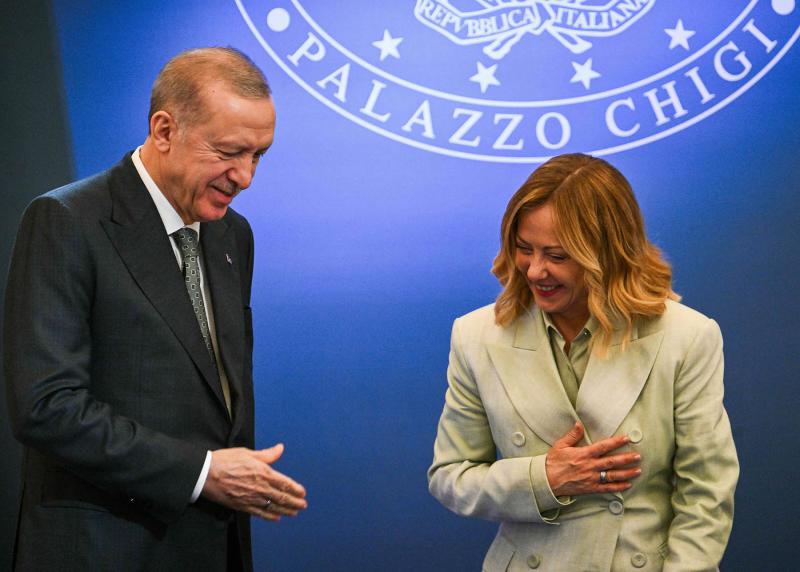
Turkish arms companies are increasingly being considered in a more in-depth manner for European defence strategy. Another key example is the emerging partnership between Baykar (the Turkish arms company owned by Erdoğan’s son-in-law) and Italy’s Leonardo. Framed as a “win-win” outcome by Baykar at the Turkey–Italy Summit, the deal marks a significant step toward integrating Turkish defence technology into Europe. The agreement, endorsed politically by Meloni and Erdogan just a month after İmamoğlu’s arrest, outlines joint work on UAVs, using Italian infrastructure as an entry point. This collaboration not only enhances Turkey’s standing but also secures Baykar’s presence in the European market, fostering further defence collaboration with the political regime in Turkey.

In this context, Turkey is emerging as a more self-assured player during uncertainties related to ongoing US support under Trump, and the wars in the Middle East and Ukraine. Erdogan, in particular, has adopted a notably confident tone, casting Turkey as essential to Europe’s future. “It is becoming increasingly impossible for a Europe without Turkey to continue its existence as a global actor,” he asserted, emphasising that “European security without Turkey is unthinkable.” These remarks illustrate a strategic messaging strategy that utilises Turkey’s military importance and growing role in regional diplomacy to seek recognition and influence within Europe’s changing security landscape. Nonetheless, the Turkish regime plans to set the terms of this partnership: while it offers cooperation, it also demands silence on its internal authoritarian practices, resembling the transactional relationships Europe previously had with regimes like Mubarak’s Egypt.

To sum, European reactions reflect strategic interests and security anxieties rather than a solid response to democratic backsliding in Turkey. The case of İmamoğlu exemplifies how pragmatism is here to stay in the West’s relationship with Turkey.

Begum Zorlu is an ESRC research fellow at City St George’s, University of London; Convenor of the PSA Turkish Politics Specialist Group and Content Producer at SES Equality and Justice Platform.

See the article featured at PSA Blog.

Looking At The Leadership Contest In The Conservative Party Through a Gendered Lens

In the summer of 2022, British politics was dominated by two seemingly unrelated developments. On the one hand, the United Kingdom experienced record-breaking temperatures, with unprecedented heatwaves disrupting transport networks, public services and daily life, while intensifying debates over the government’s preparedness for the climate crisis. On the other, Westminster was consumed by the Conservative Party leadership contest that would determine the country’s next Prime Minister following Boris Johnson’s resignation. Although these events appeared disconnected, they both highlighted broader questions about political leadership, governance and the priorities of the Conservative government at a moment marked by economic uncertainty, rising inflation and an escalating cost-of-living crisis.

The leadership contest was precipitated by the collapse of Boris Johnson’s premiership following months of political instability. Johnson had survived a succession of controversies, including repeated allegations concerning breaches of COVID-19 lockdown regulations (“Partygate”), questions over ministerial ethics, accusations of cronyism and nepotism, and growing criticism of his leadership style. However, a wave of ministerial resignations in July 2022 ultimately rendered his position untenable, forcing him to announce his resignation after losing the confidence of a substantial proportion of his parliamentary party. Following several rounds of voting among Conservative Members of Parliament, Liz Truss and Rishi Sunak emerged as the final two candidates, with the party membership entrusted with selecting Britain’s next Prime Minister. Importantly, both candidates had served in Johnson’s Cabinet and had remained loyal to his government throughout much of the political turbulence surrounding his premiership, raising questions about the extent to which the leadership election represented substantive political renewal rather than a change of personnel.

At first glance, the leadership contest appeared historically significant from the perspective of descriptive representation. The Conservative Party fielded one of the most diverse leadership races in British political history, with several women competing alongside candidates from ethnic minority backgrounds. The presence of politicians such as Kemi Badenoch and Suella Braverman was celebrated by many Conservative politicians and supporters as evidence of the party’s inclusiveness and its ability to promote women and ethnic minority politicians to the highest levels of government. Such developments were frequently contrasted with assumptions that progressive parties alone provide opportunities for historically underrepresented groups.

Yet the diversity of the candidate field also exposed the limits of equating descriptive representation with substantive representation. While the race featured an unprecedented number of women and minority candidates, none advanced a political programme centred on gender equality, anti-racism or the protection of marginalised communities. Instead, the contest unfolded within an ideological framework shaped by the Conservative Party’s broader positions on public spending, immigration, identity politics and culture-war issues. The candidates broadly endorsed a programme combining fiscal conservatism, support for restrictive immigration policies and scepticism towards contemporary social movements such as Black Lives Matter and trans rights. This reflected not only ideological continuity within the Conservative Party but also the broader political context of post-Brexit Britain, where debates surrounding national identity, sovereignty and cultural values had become increasingly central to electoral competition. At a time when the United Kingdom faced a severe cost-of-living crisis and widening social inequalities, critics argued that continued support for austerity-oriented economic policies would disproportionately affect women, low-income households and minority communities, despite the symbolic diversity represented within the leadership contest.

Among the candidates, Kemi Badenoch emerged as one of the most prominent representatives of the Conservative Party’s right wing. Born in London to Nigerian parents, Badenoch attracted considerable attention through her criticism of concepts such as white privilege and institutional racism, her opposition to expanding transgender rights and her broader critique of what she characterised as identity politics. She also generated controversy through statements questioning aspects of contemporary climate policy and comments that critics argued minimised or legitimised Britain’s colonial past. Although eliminated before the final stages of the contest, Badenoch’s campaign demonstrated the growing influence of culture-war politics within contemporary Conservative Party debates.

Similarly, Suella Braverman, whose parents emigrated from India during the 1960s, positioned herself firmly on the party’s right. A prominent supporter of the government’s policy of transferring asylum seekers to Rwanda for offshore processing, Braverman consistently adopted a restrictive approach to immigration and asylum policy. Following legal challenges to the Rwanda scheme, she argued that it was “time to complete Brexit and let the British people decide who can and cannot stay in our country,” framing migration control as an issue of national sovereignty and democratic self-government. Her campaign illustrated how immigration remained one of the defining ideological fault lines within the leadership contest.

Penny Mordaunt represented a somewhat different profile. Having spent almost two decades in Westminster, she became the first woman to serve as Secretary of State for Defence in 2019. Her political career also reflected longstanding engagement with transnational conservative networks, including participation in George W. Bush’s 2004 presidential campaign. Nevertheless, Mordaunt maintained broadly interventionist positions on defence and foreign policy, supported military engagement overseas and voted against proposals to establish a comprehensive inquiry into Britain’s role in the Iraq War. Although sometimes portrayed as representing the more moderate wing of the party, her record nevertheless reflected significant continuity with established Conservative positions on security and defence.

The final contest ultimately pitted Liz Truss against former Chancellor Rishi Sunak. Truss, who had begun her political career as a member of the Liberal Democrats before joining the Conservative Party, had held several senior Cabinet positions, including Secretary of State for Justice, Lord Chancellor and Foreign Secretary. Throughout the campaign she was frequently described as the candidate most closely associated with Boris Johnson’s political agenda and received the endorsement of several prominent Johnson allies, including Braverman. Her record in government had also generated controversy, particularly regarding foreign policy. Among the most widely discussed examples was her public support for British citizens volunteering to fight in Ukraine following Russia’s invasion, a statement that prompted criticism because participation in foreign conflicts raised complex legal and diplomatic questions. She also faced criticism over the government’s continued export of arms to Saudi Arabia despite ongoing concerns regarding the conflict in Yemen. Domestically, Truss repeatedly criticised what she described as “post-modernist” approaches to education and equality, arguing that schools devoted excessive attention to issues such as racism and sexism at the expense of literacy and numeracy. These interventions reflected a broader Conservative discourse positioning debates around equality and identity as distractions from educational standards and economic performance.

Throughout the leadership campaign, issues relating to gender identity and transgender rights occupied a remarkably prominent place in political debate. Rather than presenting competing visions for advancing gender equality or addressing structural inequalities affecting women, much of the discussion centred on restricting the rights of transgender people. International media observed this trend, with CNN describing the contest as becoming “a transphobic spectacle” because of the prominence of rhetoric directed towards transgender communities. At the same time, candidates’ broader parliamentary voting records revealed relatively limited support for measures concerning gender equality, climate action and refugee protection. Consequently, while the leadership contest represented an important milestone in terms of descriptive diversity, it did not signify a corresponding shift towards more inclusive or progressive policy agendas. Instead, it illustrated how the increasing diversity of political elites does not necessarily translate into substantive representation of women, minority groups or marginalised communities, demonstrating the distinction between symbolic representation and transformative political change.