This article is a part of the series on the reflection of the 2025 Strategic Defence Review for the Global Disorder Cluster. See the full post here.
August 2025
This year’s UK Strategic Defence Review (SDR) marks one of the most significant reconfigurations of British defence policy since the Cold War, shifting focus from two decades of expeditionary warfare[1] towards “warfighting readiness” while emphasising the need to advance in AI and autonomous systems and encouraging whole-of-society preparedness.
Addressing what the review describes as “multiple, direct threats” requiring urgent response, this transformation involves the biggest increase in military spending since the Cold War, extensive nuclear upgrades, and reforms to address modern innovation challenges. The review shows how the current government aims to position security as the fundamental organising principle of governance, supported by Keir Starmer’s opening statement that “national security is the foundation” of the government’s strategy.
Looking across the review, its repeated focus on “whole-of-society” mobilisation (mentioned over 20 times) stands out as a significant shift towards militarisation. Yet what emerges most clearly from the document, and provides the rationale for this shift, is the centrality of threat framing as an organising logic, with every major policy recommendation flowing directly from assessments of adversarial capabilities and intentions.
The review is based on the assertion that Britain faces such profound threats that preserving the current situation is no longer feasible, necessitating comprehensive change. While it recognises challenges like terrorism and demographic shifts, it highlights Russia and China as the main threats influencing the UK’s defence policy.
The document uses temporal indications to distinguish different levels of urgency for various threats. Russia is presented as an immediate threat actively attacking the UK through espionage, cyber-attacks, nuclear threats, and information manipulation. China, meanwhile, is described as a “sophisticated and persistent challenge,” indicating a longer-term pressure that demands ongoing preparedness for strategic competition. These distinctions support both short-term solutions and long-term transformation justified by the urgency framing. Additionally, the emphasis on urgency elevates the overall security situation above usual political cycles.
The focus also presents authoritarian coordination among these states’ leadership as a challenge to what has been called the rules[2]-based international order. It justifies its “NATO First” strategy as crucial for maintaining the global system underpinning Britain’s security. Instead of viewing Russia, China, Iran, and North Korea as isolated regional concerns, the document explicitly links them through a pattern of authoritarian cooperation. By emphasising these increasing connections, the review consolidates various security threats into a single, unified threat that requires a comprehensive response.
Nuclear modernisation also exemplifies threat-driven policy, as major investments in new warheads and submarines stem from concerns that Russia and China prioritise nuclear weapons in their security strategies and are quickly growing their arsenals.
Another important part is that the review’s technological transformation plan is directly based on this threat assessment. It highlights worries about artificial intelligence and autonomous systems, particularly in relation to China’s technological progress. The document cautions that Britain might encounter Chinese technology in any conflict or with any opponent. This view shifts innovation focus into a survival mode, making technological progress essential for staying relevant in future conflicts.
Yet this heavy emphasis on technological solutions exposes both contemporary anxieties and potential strategic vulnerabilities. The review repeatedly portrays innovation, artificial intelligence, and autonomous systems as decisive in future conflicts, promising that technological progress will restore Britain’s military advantage. Such technological determinism raises concerns about over-reliance on complex systems that may prove fragile in combat, reflecting perhaps unrealistic expectations of what innovation can deliver.
The SDR’s perspective also reveals the constraints imposed by its threat-centric framework. Regions beyond the Euro-Atlantic receive minimal attention beyond scattered references, viewed primarily through narrow lenses of counter-terrorism operations and countering Russian or Chinese influence.
Overall, the SDR demonstrates how threat framing has become the central lens through which British defence policy is articulated, enabling expansive militarisation and technological investment. At the same time, this framing narrows the scope of diplomacy, sidelining issues such as climate change while reinforcing a security agenda defined primarily by great power competition.
[1] Expeditionary warfare refers to the deployment of a state’s military forces abroad to conduct combat operations in a foreign country.
[2] The “rules-based international order” generally refers to the post-1945 system of international norms, institutions, and practices designed to regulate state behaviour through agreed rules rather than raw power.
While local politicians across Europe have spoken out against the imprisonment of Istanbul Mayor Ekrem İmamoğlu and the broader trend of democratic backsliding in Turkey, national leaders have largely remained silent, preferring to maintain ongoing cooperation with Ankara.
Photo: AFP
More than 50 days have passed since the arrest of Istanbul’s popular mayor, Ekrem İmamoğlu. Following his historic victory in the 2019 Istanbul mayoral election, İmamoğlu, a member of the Republican People’s Party (CHP), has become one of the strongest challengers to President Recep Tayyip Erdoğan’s political dominance. His victory not only marked the end of Erdoğan’s Justice and Development Party (AKP) ‘s decades-long control over Istanbul but also represented a larger quest for democratic reform. In light of his growing popularity, İmamoğlu has faced persistent political and legal pressure, which many perceived as part of a broader strategy to marginalise opposition voices.
In March 2025, İmamoğlu was finally arrested on multiple charges, including corruption and alleged connections to the Kurdistan Workers’ Party (PKK). This came just days before the CHP was set to nominate him as its candidate for the 2028 presidential elections. At the same time, Istanbul University revoked his degree, a constitutional requirement for presidential candidates. The arrest led to widespread protests in major Turkish cities, while over 100 CHP-affiliated officials, municipal employees, and thousands of students and protestors were also arrested.
Civil society and local governments in Europe have raised their voices against this new authoritarian step taken by the AKP government. In an unprecedented show of solidarity, dozens of European mayors and municipal leaders have issued joint statements and videos condemning the arrest. The declarations called for İmamoğlu’s immediate release and urged European institutions to take urgent action to defend democratic freedoms in Turkey.
The situation in Turkey is very serious. Europe must take action. That’s why, together with the Italian delegation and colleagues from Spain and France, we have sent a letter to the Turkish ambassador to the EU to protest the arrest of Mayor @imamoglu_int … and to demand respect… pic.twitter.com/LFk3x58cBv
The Council of Europe labelled the arrest politically driven and a danger to democracy. The Parliamentary Assembly of the Council of Europe called for his swift release, the dismissal of charges, the reinstatement of his degree, and an end to the repression against the protesters. The Congress of Local and Regional Authorities similarly condemned the arrest, describing it as an assault on political pluralism and the will of Istanbul’s electorate.
While the Council of Europe, some European politicians, members of the European Parliament, and local actors actively mobilised against the Turkish government’s authoritarian actions, political leaders in key Western nations remained notably restrained. A relative exception was German Chancellor Scholz, who explicitly condemned İmamoğlu’s detention, deeming it a setback for democratic principles and calling on political elites to cease politically motivated prosecutions. France also, through its Foreign Ministry, issued a public statement framing it as a threat to democracy. Yet overall, European leaders’ reactions were often muted or limited to generic expressions of concern, lacking the urgency, action, and clarity needed.
Council of Europe’s Congress of Local and Regional Authorities sent a clear and urgent message. Their high-level delegation became the first international body to meet me in Silivri, standing in the very place this government uses to contain dissent. They also visited the… pic.twitter.com/AmEFzfmkzt
— Ekrem İmamoğlu (International) (@imamoglu_int) May 7, 2025
As the nationwide protests against the arrest began, followed by harsh crackdowns from security forces, CHP leader Özgür Özel expressed his disappointment with Europe’s weak political reaction, specifically highlighting that the silence from Keir Starmer and the British Labour Party is “really hard to understand.” This sentiment was intensified by issues surrounding press freedom and digital censorship, such as the deportation of Mark Lowen, a BBC journalist covering the protests. At the same time, platform X (formerly Twitter) was reported to be blocking opposition accounts in Turkey. Despite the alarming increase in repression, UK officials and some other European states have not issued any significant high-level response to the situation.
Erdoğan Turned Strategic Leverage into Political Immunity
Erdogan’s success in positioning Turkey as a key regional power has significantly altered the West’s response to democratic backsliding within the country. Turkey has become deeply embedded in Europe’s strategic considerations, notably through its role as a mediator and drone technology supplier in Russia’s war on Ukraine. Some commentators have even suggested that Turkish troops could participate in a future Ukraine peacekeeping mission. It has also sold drones to Poland and Croatia. Its role in managing migration, particularly through the 2016 EU-Turkey agreement, is viewed by European leaders as essential to preserving domestic political stability. These dynamics have not silenced Western leaders entirely, but it has produced a clear reluctance to challenge the regime over its authoritarian measures.
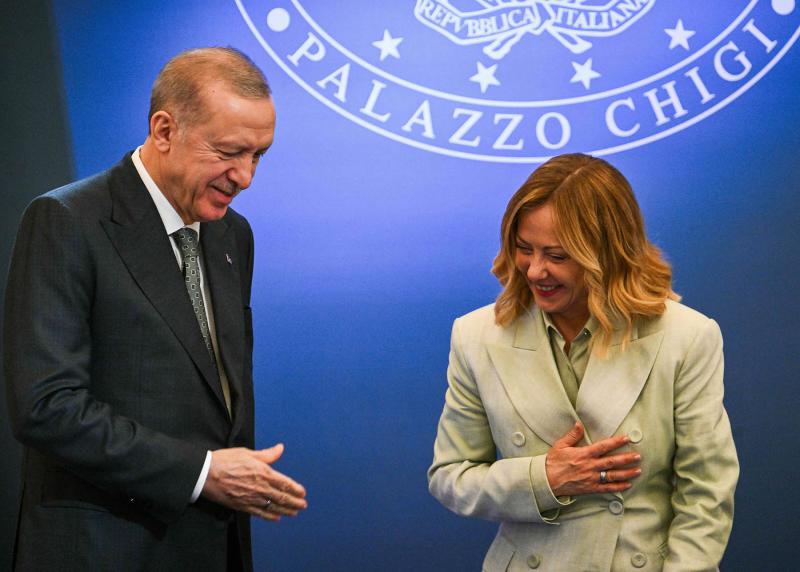
Turkish arms companies are increasingly being considered in a more in-depth manner for European defence strategy. Another key example is the emerging partnership between Baykar (the Turkish arms company owned by Erdoğan’s son-in-law) and Italy’s Leonardo. Framed as a “win-win” outcome by Baykar at the Turkey–Italy Summit, the deal marks a significant step toward integrating Turkish defence technology into Europe. The agreement, endorsed politically by Meloni and Erdogan just a month after İmamoğlu’s arrest, outlines joint work on UAVs, using Italian infrastructure as an entry point. This collaboration not only enhances Turkey’s standing but also secures Baykar’s presence in the European market, fostering further defence collaboration with the political regime in Turkey.
In this context, Turkey is emerging as a more self-assured player during uncertainties related to ongoing US support under Trump, and the wars in the Middle East and Ukraine. Erdogan, in particular, has adopted a notably confident tone, casting Turkey as essential to Europe’s future. “It is becoming increasingly impossible for a Europe without Turkey to continue its existence as a global actor,” he asserted, emphasising that “European security without Turkey is unthinkable.” These remarks illustrate a strategic messaging strategy that utilises Turkey’s military importance and growing role in regional diplomacy to seek recognition and influence within Europe’s changing security landscape. Nonetheless, the Turkish regime plans to set the terms of this partnership: while it offers cooperation, it also demands silence on its internal authoritarian practices, resembling the transactional relationships Europe previously had with regimes like Mubarak’s Egypt.
To sum, European reactions reflect strategic interests and security anxieties rather than a solid response to democratic backsliding in Turkey. The case of İmamoğlu exemplifies how pragmatism is here to stay in the West’s relationship with Turkey.
Begum Zorlu is an ESRC research fellow at City St George’s, University of London; Convenor of the PSA Turkish Politics Specialist Group and Content Producer at SES Equality and Justice Platform.
Sırrı Süreyya Önder, a strong advocate for democracy and Kurdish rights, gained prominence through his role in Turkey’s pro-Kurdish movement and efforts to mediate peace between the state and the PKK. His death sparked tributes from across the political spectrum, with many praising his commitment to dialogue and peaceful resolution of Turkey’s deep-rooted conflicts.
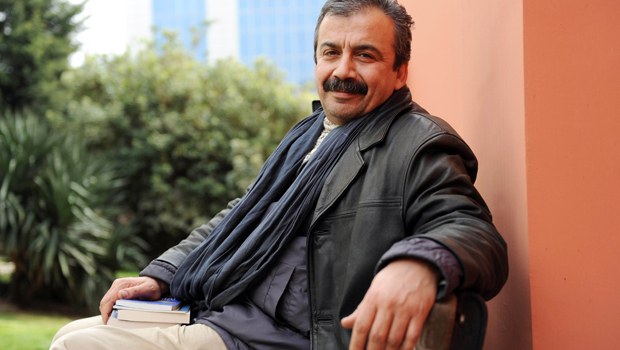
Sirri Sureyya Önder, a key lawmaker from Turkey’s pro-Kurdish DEM Party and a significant player in the attempts to resolve the long-standing conflict with the Kurdistan Workers’ Party (PKK), passed away on Saturday at the age of 62.
Also a filmmaker and poet, he was a long-standing advocate for Kurdish rights and democratic reform. He came of age during a turbulent period in Turkish history, shaped by the radical leftist movements of the 1960s and 1970s. This era was marked by widespread student activism, labor strikes, and intense violent clashes between left- and right-wing groups.
In 1978, while still a high school student, Önder was arrested for protesting the Maraş Massacre. The massacre, which occurred in the city of Kahramanmaraş, involved a violent assault by ultranationalist militants on the Alevi community, resulting in the deaths of more than 100 people. The incident heightened sectarian tensions across the country. Önder’s early encounter with political violence and state repression would go on to shape his lifelong commitment to justice and democratic principles.
The 1980 coup further interrupted his studies at Ankara University’s Faculty of Political Science, and he spent part of his youth imprisoned in Mamak, Ulucanlar, and Haymana Prisons under the repressive conditions of military rule.
Önder first gained national recognition through his contributions to cinema in the early 2000s, wherein his films frequently examined themes of social justice, marginalization, and political memory. However, it was during the peace process of the 2010s that he emerged as a known advocate for democracy and peace. Apart from his quest to contribute to the Kurdish peace process, he was also extensively acknowledged for his involvement in the Gezi Park protests, during which he took a bold stance against the park’s destruction which was reflected in an iconic video in which he proclaimed, “I am also the deputy of the trees. “
His more than decade-long role in the Kurdish peace process stands as one of the most significant aspects of his legacy. In March 2013, at the Newroz (Kurdish New Year) celebrations in Diyarbakır, he publicly read out Öcalan’s call for a ceasefire, relaying the PKK leader’s message of a “silence of weapons” to a massive crowd.
When this peace process collapsed in 2015/2016, authorities lifted the parliamentary immunity of numerous HDP lawmakers, including Önder, and launched a sweeping crackdown. Ironically, Önder’s 2013 Newroz speech, delivered as part of a state-approved peace effort, was later used to charge him with “terrorist propaganda.” Despite urging reconciliation, he was sentenced in 2018 to 3 years and 6 months in prison. In 2019, the Constitutional Court ruled his conviction violated his freedom of expression, recognizing his speech as peaceful and part of the resolution process. He was released that, reaffirming his commitment to peace.
He was part of the renewed peace process
Just in the previous weeks, he participated in a DEM Party delegation that met with imprisoned PKK leader Abdullah Öcalan, as well as President Recep Tayyip Erdoğan, to seek a restart of negotiations and pave the way for a new peace process.
His death came at a delicate moment for Turkish politics, as hopes for a renewed peace initiative had been cautiously rekindled after years of escalating violence and political polarization. The conflict between the Turkish state and the PKK, which began in 1984, has claimed over 40,000 lives.
Tributes poured in from across the political spectrum, with many hailing Onder’s efforts to bridge divides and seek a non-violent solution to one of Turkey’s most entrenched conflicts. “He dedicated his life to peace, dialogue, and justice,” the DEM Party said in a statement. “His voice will be deeply missed at a time when it is needed most.”
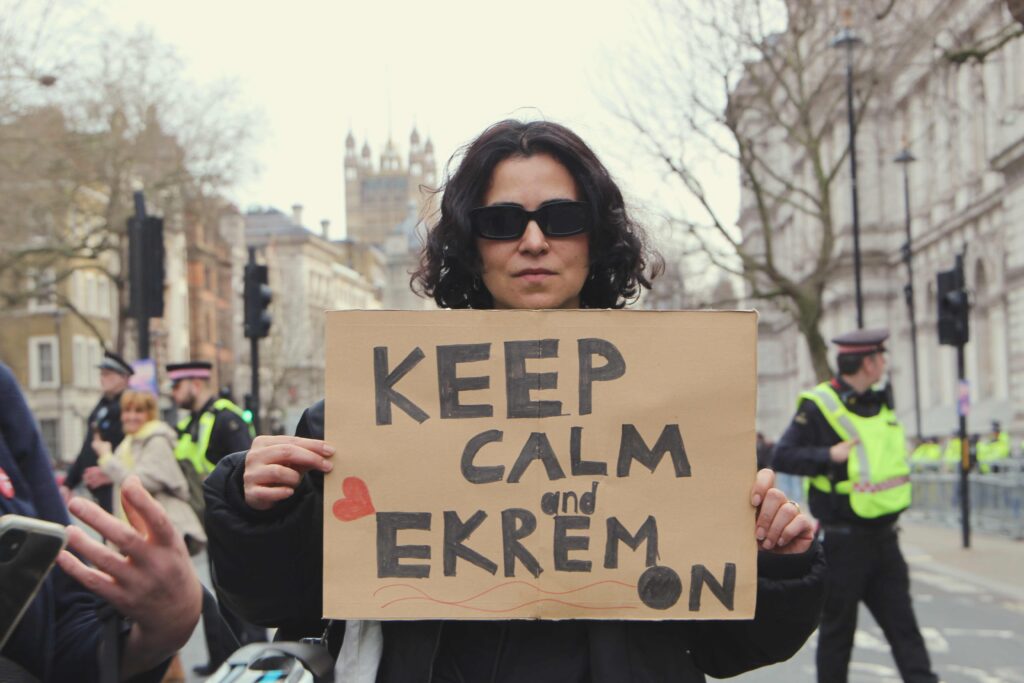
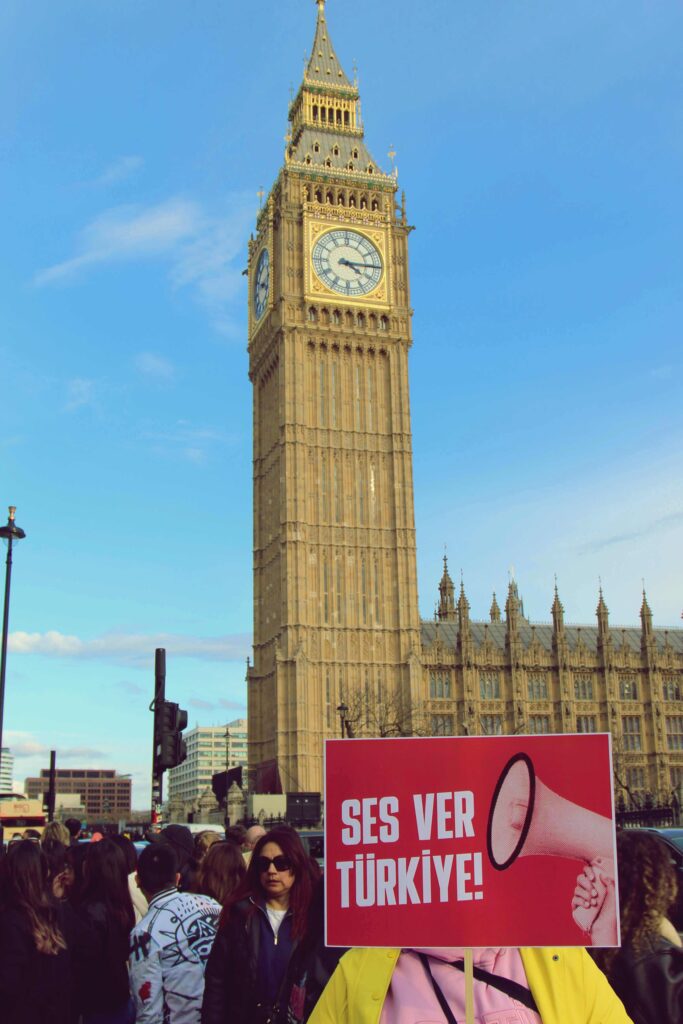
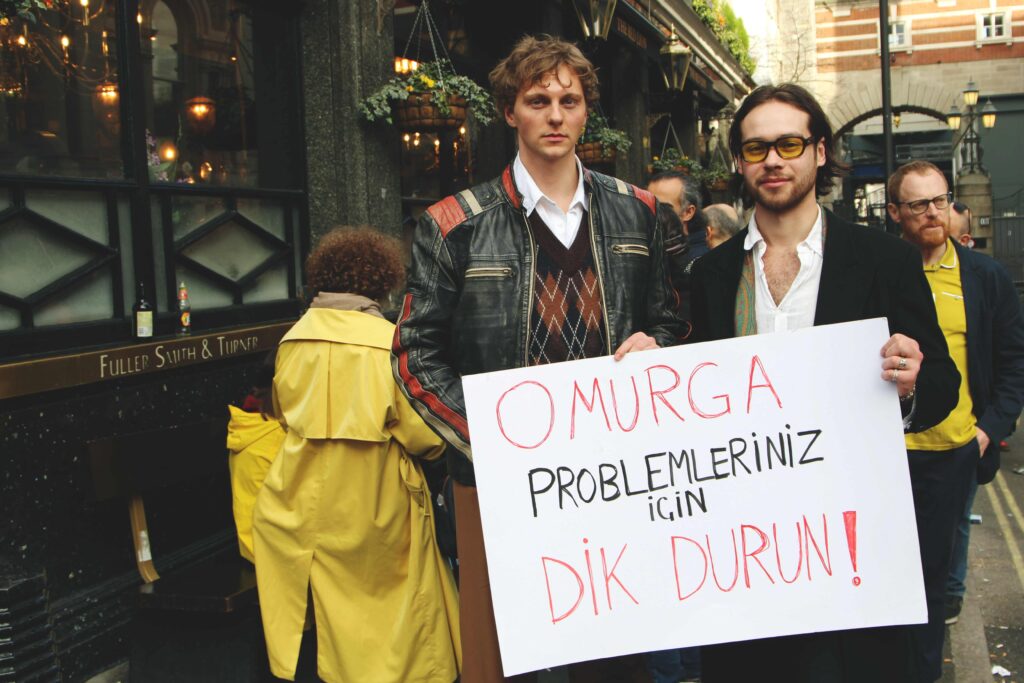
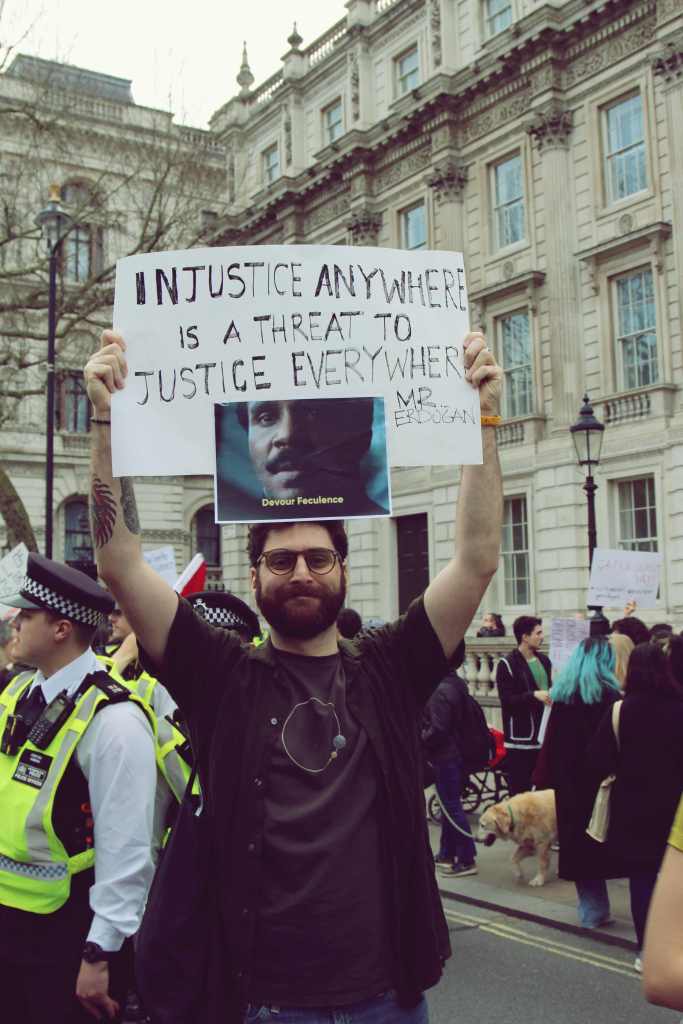
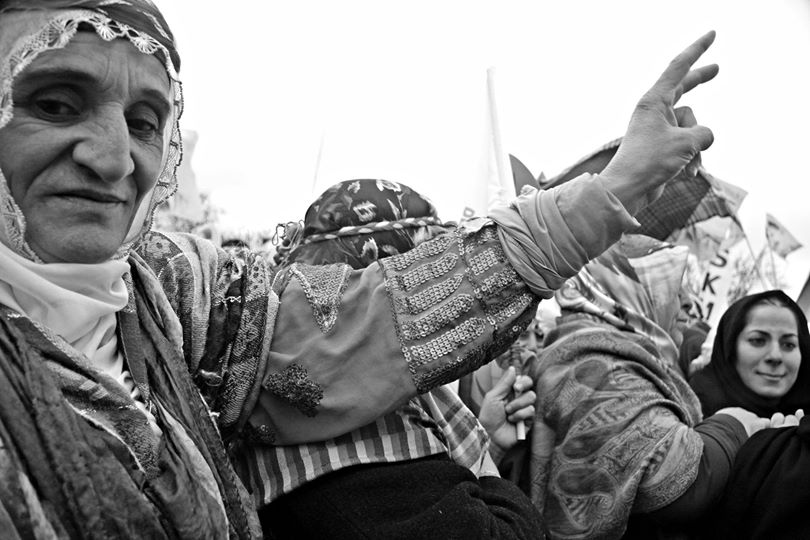
The arrest of Istanbul’s popular opposition mayor, Ekrem İmamoğlu, has sparked a wave of mass mobilisations not only across Turkey but also in major cities around the world. This post from Equality Justice Women Platform shares some reflections from a solidarity protest in London, showing that the demonstrations reflect the “spirit of Gezi,” uniting people across political divides and generations.
Begum Zorlu
After the arrest of Istanbul’s charismatic opposition mayor, Ekrem Imamoglu, Turkey has encountered escalating unrest*. Significant protests have arisen in cities such as Istanbul, Ankara, and İzmir, where thousands have gathered in public spaces to show solidarity and oppose a growing authoritarian regime. These demonstrators have encountered police violence and arrests, while the government has imposed multiple restrictions on social media and largely ignored the protests in state-controlled media. Over 1,000 protesters, as well as journalists and writers, have been arrested.
While repression grew in Turkey, the mobilisation has gained international momentum, leading to major protests in Western cities such as Berlin, Brussels, London, New York, and Amsterdam. I attended the demonstration in London this saturday, where over a thousand people gathered in Trafalgar Square and later marched towards Parliament Square.
A range of organised leftist groups, Kurdish and Alevi organisations, stood alongside students and independent participants to express their solidarity. A symbolic primary election ballot box was also set up in the square, allowing attendees to cast their votes for Ekrem İmamoğlu as the CHP’s (Republican People’s Party) presidential candidate.
What stood out in this mobilisation was its deliberate evocation of the slogans and spirit of the Gezi Park Protests. Protesters made repeated references to the 2013 demonstrations, which began as a defence of a public park in central Istanbul but quickly evolved into a mass uprising against police brutality and the increasingly authoritarian direction of the AKP government. Twelve years on, Turkey has regressed even further, with the state consolidating control over key institutions, facilitating increased repression of popular opposition figures.
As democratic backsliding in Turkey deepened, maintaining protest movements that brought together diverse political groups became increasingly challenging—especially as the Kurdish opposition had been heavily criminalised, and the mainstream opposition often hesitated to publicly associate with them. In this context, the unity of multiple groups evoked strong parallels with the Gezi Movement, when a broad coalition of social actors was able to unite around shared demands.
At the protests in London, there was a strong presence of students and young people. Many remarked that they had been “too young” to take part in the Gezi movement, having grown up under the only political reality they’ve ever known, the current regime. Slogans such as “this is just the beginning, the struggle will continue,” which had become emblematic during Gezi, were once again at the heart of the gathering.
The the memory of that earlier social movement was strongly felt in the square, shaping the atmosphere and lending historical dynamism to the protest. It provided a broader framework through which to interpret the attempted criminalisation of Ekrem İmamoğlu as part of a wider struggle for justice, democracy, and resistance in Turkey. It also highlighted the need for diverse opposition groups to unite against authoritarianism.
*It is important to underline that just a day before the arrest, Istanbul University annulled the diploma of İmamoğlu, effectively blocking his presidential nomination. In Turkey, to be a presidential candidate, a university degree is needed.
The conflict between the PKK and the Turkish state, one of the longest-running insurgencies in the Middle East. Last week, Abdullah Öcalan, the leader of the PKK, has called for the group’s dissolution, asserting that its mission is now obsolete. Is a new door to peace being opened? This post argues that while there is room for cautious optimism, questions remain like compliance, responses of the ruling coalition, and the future of militants abroad.
“I am making a call for the laying down of arms”—these words from imprisoned Kurdistan Workers’ Party (PKK) leader Abdullah Öcalan represent yet another critical juncture in Turkey’s recent history to solve its long ongoing Kurdish question.
By urging the PKK to dissolve after decades of insurgency, Öcalan’s remarks opened the door to the formation of a new peace initiative, yet there is still vast uncertainty. Will the fighters comply? Will the government re-escalate the conflict and repression? How will the dynamics in the broader Middle East shape the process? It can be said that Turkey’s recent “peace process” remains a puzzle to many of the followers and agents of Turkish politics.
When the talks of a peace process were raised, I witnessed two young Kurdish women in London discussing it with scepticism. “I don’t want to hear about another peace process. I remember what happened the last time they talked about peace,” one of them said. She was referring to the large-scale contention that erupted in 2015 when the peace negotiations between the PKK and the Turkish government collapsed. That failure triggered a violent escalation, resulting in mass casualties and intense urban warfare.
The breakdown occurred in the context of changing regional dynamics related to the Syrian civil war and political shifts after the June 2015 elections, when Erdoğan’s Justice and Development Party (AKP) lost its parliamentary majority for the first time since 2002, leading to a coalition with the far-right Nationalist Movement Party (MHP). Since the failure of this process, Turkey has experienced significant democratic decline, with increased restrictions on media and civil society, institutional control and widespread detention of opposition figures, journalists, and politicians.
The collapse followed the Solution Process” (2013–2015), a peace effort that initially raised hopes for resolving the decades-long Kurdish conflict but ultimately unravelled amid mutual distrust and regional developments. This optimism was symbolised by PKK leader Abdullah Öcalan’s historic 2013 Newroz message, delivered from prison, calling for a ceasefire and a democratic resolution. The process involved direct negotiations between Turkish intelligence officials and PKK leadership, public acknowledgment of the Kurdish issue by then-Prime Minister Erdoğan, and constitutional reforms recognising Kurdish cultural rights.
However, the peace efforts collapsed due to several factors: Turkey’s reluctance to grant political autonomy, the PKK’s unwillingness to fully disarm, the spillover effects of the Syrian civil war, and domestic political pressures on both sides. Meanwhile, as the peace process deteriorated, the YPG (People’s Protection Units) emerged as the primary US ground partner against Islamic State in Syria—a development Turkey viewed as an existential threat, given the YPG’s organisational ties to the PKK. This further complicated Turkey’s regional position and hardened its stance against Kurdish political aspirations, both domestically and across its borders.
The new process a decade later
Is the process different this time? The current initiative emerged out of the blue when MHP leader and government ally Devlet Bahçeli proposed that Öcalan should address parliament to announce his organisation’s dissolution. Bahçeli’s proposal in late October suggested Öcalan might “benefit from a right to hope” by publicly announcing the end of the PKK’s insurgency. This represented a remarkable departure from the MHP’s longstanding position, which had previously advocated Öcalan’s execution and rejected any form of dialogue with the PKK. These initial steps paved the way for a series of meetings between Öcalan and pro-Kurdish Peoples’ Equality and Democracy (DEM) Party representatives.
Later, in his statement delivered through the DEM Party delegation, Öcalan called the PKK to lay down arms and dissolve itself. Rather than articulating specific demands, he gave considerable attention to a historical analysis of the PKK’s formation, placing its emergence within the context of Cold War dynamics and the systematic suppression of democratic channels. The statement’s strategic omission of concrete demands introduced an ambiguity, potentially to enhance its acceptance across distinct political groups.
The road ahead
What the following steps are is unclear from Öcalan’s statement. With the PKK announcing a ceasefire, the ball is now in the court of the ruling coalition. During the previous process, there were hopes that a momentum for peace would lead to democratisation through increased political participation. While the statement emphasises this need, in reality, there is great suspicion.
Journalists, politicians, and civil society activists are constantly under threat in today’s Turkey. Nine DEM Party mayors have been dismissed on terrorism-related allegations and replaced with government trustees. One of Turkey’s popular journalists, Nevşin Mengü, was sentenced to prison for interviewing ex-PYD leader Salih Muslim; many others are behind bars. Istanbul Mayor İmamoğlu and several other CHP (Republican People’s Party) district mayors have also faced arrests or various forms of repression, including criminal indictments.
So why is the Turkish government enabling this process while intensifying authoritarianism?
One theory suggests Erdoğan seeks DEM Party support to secure his presidency as he lacks a supermajority to be re-elected. It is visible that Erdoğan is seeking to expand his influence by recruiting opposition figures, as seen with Serap Yazıcı, a law professor and Future Party founding member who recently joined his party. This is because to run for president again, he either needs an early election or a constitutional amendment removing term limits. However, DEM Party has shown no indication of supporting him.
Furthermore, Erdoğan’s political strategy is shaped around establishing himself as a crucial figure in resolving regional and global crises. Just as he positions himself as the key mediator in the Ukraine- Russia conflict, particularly through his role in facilitating the grain deal, Erdogan seeks to reinforce the narrative that only he can resolve such complex challenges. A peace deal could form part of a wider strategy to stabilise Syria’s geopolitical landscape and amplify his role as a strong leader.
Similarly, it can be argued that the timing, coinciding with developments in Syria, is not coincidental. Turkey is seeking to weaken the influence of the Syrian Democratic Forces (SDF), a coalition primarily led by the People’s Protection Units (YPG), during Syria’s ongoing transition. While the YPG asserts its independence from the PKK, both groups embrace Öcalan’s ideology and share historical convergence. Turkey has continually refused to accept their distinction, which has paved the way to legitimise its military actions in SDF-held territories in Syria. The extent to which a peace process with the PKK might shift Turkey’s stance on the group remains unclear. Figures like Salih Muslim and SDF commander Mazloum Abdi welcomed Öcalan’s PKK’s disarmament call positively while underlining their autonomy. A more hopeful outlook can suggest that an agreement with the PKK could greatly reduce security tensions between Turkey and the SDF, marking an important step towards regional stability.
Overall, there are significant challenges regarding PKK fighters’ and Öcalan’s fate along with government commitment. Consequently, while the call for peace is a positive development, it is marked by uncertainty. Support from international actors can make this process stronger. European states, notably Germany, have echoed the CHP’s call for a parliament-led process, representing a promising diplomatic engagement. However, as issues like the transition of former combatants to civilian life remain unclear, especially with the opposition’s historical resistance to Kurdish cultural rights, it is for certain that the peace attempt will remain a deeply contentious issue.
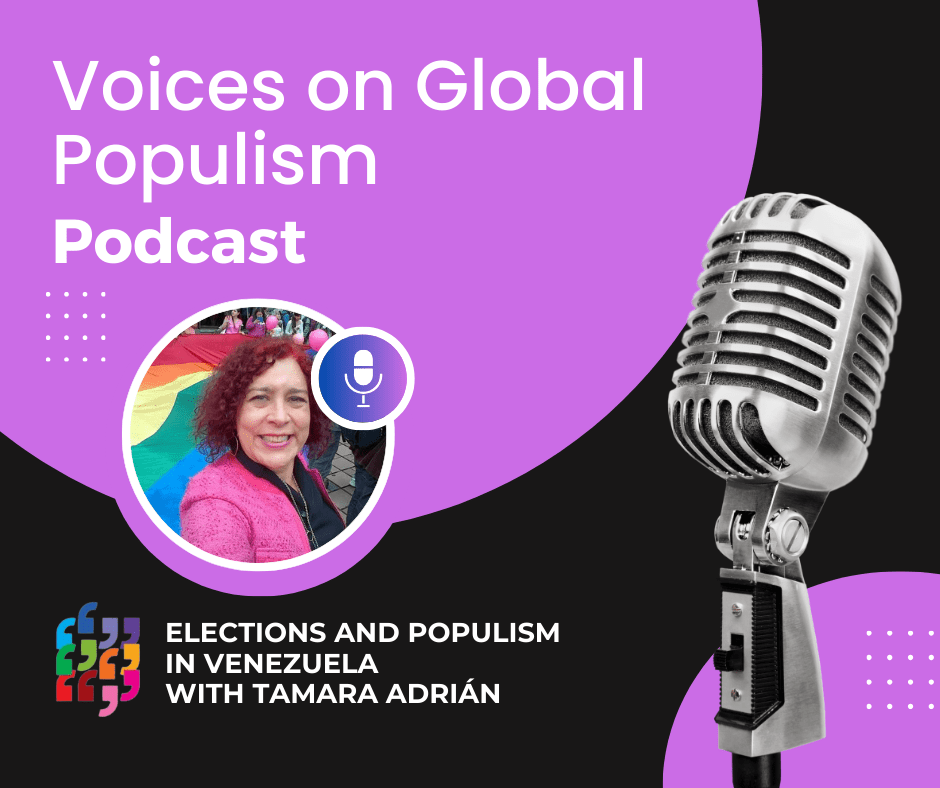
With contested vote counts, repression, and international calls for transparency, Venezuela exemplifies the challenges faced by democracies in an era of rising populism. In this podcast we host Tamara Adrián, an opposition activist who offers unique insights into populist and repressive strategies employed by the Venezuelan regime.
In the first episode of the podcast series “Voices on Global Populism”, we explore Venezuela’s contested elections held this summer, analysing the populist strategies at play and their broader implications for global populist trends.
The episode focuses on the electoral process that Venezuela undertook in the last year. On October 2023, Venezuelan President Nicolás Maduro reached an agreement with the opposition to pave the way for free and fair presidential elections. As part of the agreement, the regime committed to following democratic measures such as allowing international observers, while the United States pledged to ease certain economic sanctions. The opposition selected María Corina Machado as its candidate after she achieved a victory in the primaries.
However, just three months later, Venezuela’s Supreme Court—largely dominated by regime supporters—declared Machado ineligible to run, citing past financial irregularities. Consequently, a little-known candidate Edmundo González was chosen to run as the opposition candidate against Maduro.
The elections held in July further exacerbated Venezuela’s political crisis. While Nicolás Maduro declared victory, his government did not release a full and transparent vote count. Opposition activists who gathered electoral data from polling stations, encompassing over 83% of the voting tallies, exposed a significant disparity with the official narrative. According to this data, Maduro secured only 30% of the vote, compared to an overwhelming 67% for opposition candidate Edmundo González.
Despite calls for transparency from the United States, the European Union, and left-wing Latin American nations such as Brazil and Colombia, Venezuela’s National Electoral Council declared Maduro the winner without releasing disaggregated vote tallies.
The contested election triggered widespread protests and a wave of government repression. The United Nations human rights investigators have accused Maduro’s government of orchestrating a brutal crackdown highlighting widespread violence, including the detention of minors, fatalities—and the targeting of protests and online critics. While González has an arrest warrant and has fled to exile in Spain, the crackdown continues today.
To discuss these dynamics, as well as the broader theme of populism in Venezuela, we hosted opposition activist Tamara Adrián. Since the early 2000s, Tamara has been a prominent figure in Venezuela’s political landscape. She is the founder and director of Diversity and Equality Through Law and her activism spans across Latin America and beyond. She has collaborated with the International Lesbian, Gay, Bisexual, Trans, and Intersex Association and served as a special adviser on human rights for both the Pan American Health Organization and the World Health Organization. Also importantly, she is Venezuela’s first transgender member of parliament.
Below are some of the core points she underlines in the podcast. To see the full episode click here.
“The Elections Were Not Fair”
Tamara has raised a critique of Venezuela’s recent elections and the political climate under Nicolás Maduro. While she acknowledged the elections were legitimate, she argued they were fundamentally unfair. She commended the impressive organization and commitment of citizens, who served as witnesses at voting centers, ensuring transparency by securing certified copies of results, safeguarded with advanced security features. However, the aftermath of the elections reveals a picture of repression and fear.
Repression and Political Prisoners
Following the elections, over 2,000 people were imprisoned for protesting or participating in opposition groups. Many detainees were denied basic rights such as legal representation, family visits, or fair trials, leaving them isolated. Tamara underlined that currently, 1,963 political prisoners remain, despite the release of some detainees after international pressure, notably from the International Criminal Court. Yet, many remain vulnerable to re-arrest.
She also highlighted the oppressive tactics of Maduro’s regime, such as “Operation Knock Knock,” which involved sudden arrests targeting dissidents or even their family members to force compliance. This climate of fear has driven 2,000–3,000 activists into hiding or exile. Over 100 opposition politicians, spanning the political spectrum, remain imprisoned.
Public Sentiment and International Response
According to Tamara, despite the suppression, public sentiment overwhelmingly opposes Maduro. Recent surveys she mentions show 87% of the population supports the opposition, and 90–92% believe opposition candidate Edmundo González won the election.
She also acknowledged the international community’s limited ability to pressure autocratic regimes like Maduro’s. While sanctions and diplomatic efforts have been employed, they have not yield significant results. She also noted the regime’s reliance on allies like Cuba, Russia, and Turkey, which help sustain its autocratic grip.
The Role of Populism and Militarization
Tamara described how the rise of Hugo Chávez was built on populist foundations which she argued were marked by oil revenues. However, declining oil revenues and economic mismanagement have eroded his ability to deliver such benefits. In the discussion we came to a conclusion that the regime now depends heavily on military loyalty, fear tactics, and international alliances.
The Road Ahead
Tamara argued that Maduro’s imminent swearing-in as president in January, backed by the military, could mark Venezuela’s full transition into autocracy. However despite the challenges, Tamara is determined to continue her activism. Inspired by historical figures like Nelson Mandela, she said, she believes in the power of action against injustice. “When you cannot accept the state of things, you have to act,” she said, underscoring her commitment to go on.
December, 2, 2024
Begum Zorlu
This conversation is part of a podcast series exploring the influence of populism on both global and domestic politics in an age of global disorder, where shifting alliances, economic instability, and geopolitical conflicts continue to reshape the political landscape. These evolving dynamics are crucial to understanding how populism shapes struggles for democracy, gender justice, and prospects for political change. It is a part of the author’s ESRC Postdoctoral Fellowship in partnership with the SES Equality and Solidarity Association.
Uluslararası Hukuk dergisi Opinio Juris’de yayınlanan makalede, akademisyen Alonso Gurmendi, İsrail-Filistin çatışmasındaki “sivil” kavramının farklı gruplar tarafından ele alınma biçimini analiz ederek, savunmasız bireylerin öldürülmesine karşı bir norm olarak işlev görebileceğini savunuyor.
Alonso Gurmendi’nin* Savunmasızların Savunusu başlıklı makalesi 20 Ekim’de Opinio Juris’te yayınlanmış ve Eşitlik, Adalet, Kadın Platformu için kısaltılarak çevrilmiştir.
7 Ekim’de Hamas militanları Gazze çevresindeki güvenlik çitlerini kırdı, askeri kontrol noktalarını ele geçirdi ve çok sayıda İsrailli sivili öldürmek ve/veya kaçırmak amacıyla güney İsrail’e sızdı. Buna karşılık İsrail hükümeti Gazze’yi kuşatma altına aldı, yerel halka yiyecek, su ve elektrik tedarikini kısıtladı, kitlesel olarak sınır dışı etme tehditleri oluşturdu ve şehirlerinin tamamen yok edilmesi ile ilgili insana aykırı ifadeler kullandı.
Yetkililer, İsrail’in “insan hayvanlarla” savaştığı için Gazze’nin bir “çadır şehri” haline geleceğini ve “yerle bir edileceğini” söylüyor. Bu dil göz önüne alındığında, insani ve akademik alanda çalışanlar Gazze’de potansiyel bir soykırım konusunda uyarıda bulundu.
Çoğu kişi, bu muazzam ve vahim can kaybından duyduğu üzüntüyü dile getirirken, bu felaketi anlamamız açısından sivil kavramını hedef aldı. Bu makalede, sivil yaşamın korunmasının önemini vurgulamak amacıyla bu görüşlere eleştirel bir bakış açısıyla yaklaşmayı ve özellikle savunmasız ve kırılgan bireylerin öldürülmesine karşı bir normun savunulmasını hedefliyorum.
Bu, sadece tek bir “taraf” ile sınırlı olan bir sorun değil. Öne çıkan bazı örnekleri adlandırmak gerekirse, Hamas’ın saldırısının hemen ardından, akademide bazı sesler “Filistin topraklarını işgal etmenin sivil terimini doğru bir şekilde yansıttığını düşünmediklerini iddia ettiler.” Ancak günler geçtikçe, bu görüşler giderek, Filistinli sivillerin var olmadığı yönündeki görüşler tarafından bastırıldı.
Örneğin, Gazze’yi kuşatmanın bir parçası olarak İsrail’in elektrik desteği kesilmesi gereken “kuvözdeki bebeklerin” akıbeti hakkında sorulduğunda, eski bir İsrail Başbakanı öfkeyle: “Gerçekten de bana Filistinli siviller hakkında sürekli sorular mı soracaksınız? Sizin sorununuz ne? (…) Ben düşmanlarıma elektrik veya su vermek zorunda değilim” açıklamasında bulundu. Benzer şekilde, Gazze halkının refahı sorulduğunda, bir İsrail Bakanı “Gazze umurumda değil” dedi ve daha sonra Gazze’nin sakinlerini “denize kaçmaya davet edildiklerini” belirtti. Aynı şekilde, İsrail’in Başkanı “[Hamas ile] ilgisi olmayan, bilinçsiz siviller” retoriğinin doğru olmadığını ifade etti. Bu aynı ima, bazı akademisyenler tarafından da tekrarlandı.
Bu yazıda, “sivil” kavramının bu olaylar bağlamında geçerliliğini veya uygulanabilirliğini reddeden görüşlere karşı çıkmak istiyorum.”Sivil” kavramı, tüm sınırlamalarına rağmen, savunmasız ve kırılgan bireylerin lüzumsuz yere öldürülmesine karşı bir norm işlevi görüyor. Bu nedenle bu kavramı terk etmek yerine koruma ve geliştirmemiz gerektiğini savunuyorum.
Tartışmamı üç ana noktaya odaklayacağım: İlk olarak, savunmasız ve kırılgan kişilerin lüzumsuz yere öldürülmesine karşı bir kuralın var olduğunu (veya olması gerektiğini) göstereceğim. İkinci olarak, ulusal kurtuluş savaşında bu normun terk edilmesi gerektiği fikrine karşı çıkacağım. Üçüncü olarak, İsrail Savunma Kuvvetleri’nin Hamas’ın suç ortağı olduğu için Filistinli sivilleri öldürebileceği yönündeki iddialarını da benzer şekilde eleştireceğim. Son olarak sözü edilen etik veya yasa dışı eylemleri kimin durdurma yetkisine sahip olduğu şeklindeki daha geçerli soruya kaydırarak yazıyı sonlandıracağım.
Ayrıca bu yazının neyle ilgili olmadığını da açıklamam gerekiyor. Bu yazı sömürgeciliğe şiddetle direnme hakkının olmadığını savunmuyor. Aynı zamanda Filistin’in durumunu İsrail’in durumuyla eşitlemek anlamına da gelmiyor. Bu yazının içerdiklerini araştırılırken, Filistinlilerin sivil statüsünü göz ardı eden açıklamaların, İsraillilerin sivil statüsünü göz ardı eden ifadelerden daha yaygın olduğu ortaya çıktı. Filistinlilerin kendi kaderini tayin etme hakkı ve İsrail’in, Gazze ve Batı Şeria’ya yönelik onlarca yıldır süren ablukayı/işgalini sona erdirme yükümlülüğü de dahil olmak üzere, uluslararası insani hukuka uyma konusunda yasal bir yükümlülüğü var.
Sivil Kavramına Bakış
Basitçe söylemek gerekirse, “sivil” kategorisini herkesin saygı göstermesi gereken nesnel, siyasi olarak tarafsız ve zorunlu bir standart olarak tanımlamak verimli olmayacaktır. Helen M. Kinsella tarafından ayrıntılı bir şekilde gösterildiği gibi, modern savaş hukukunun kimin sivil kimin savaşçı olduğuna karar verdiği süreç tarafsız değildir. Bu ayrım, medeniyet, masumiyet ve cinsiyetle ilgili karmaşık ve çelişkili söylemlerin ve modern “insani” hukukun temel belgelerini şekillendiren tarihine dayanır. Aslında, bu söylemler olmasaydı, kavramın II. Dünya Savaşı dehşetlerinin ardından sonsuza dek kaybolmuş olabileceği bir gerçektir.
Bu temeller üzerine inşa edilen “sivil” kavramı, bu nedenle tamamen Avrupalı merkezli ve ırkçı “medeni” ve “vahşi” ayrımından ayrılamaz. Bir bakıma, bu kavramın doğal evrimidir. 19. yüzyılın “muharip olmayan” veya “vatandaş” kavramı iki özel varsayıma dayanır: “birincisi, işgalci yönetim karşısında pasiflik; ikincisi, çatışmaya katılmama”.
Böylece [sadece] düzenli silahlı kuvvetlere üye olarak askere alınanların statüleri yasal olarak değişecek ve düşman tarafından ele geçirilmeleri halinde savaş esiri olma tehlikesiyle karşı karşıya kalacaklardı” (s. 57). Bu, elbette, “medeni olmayan”, “ahlaki olmayan” şekillerde hareket eden isyancı vatandaşları, yani yerli halkı, kadın aktivistleri, partizanları ve siyasi mahkumları her türlü uluslararası korumanın dışında tutuyordu.
Bu nedenle, 1949 Cenevre Konferansı’nda İngiliz temsilcinin açıkladığı gibi, Siviller Sözleşmesi’nin tüm tasarımı savaş mağduru sivillerin korunması üzerindeydi. Bu, savaş kurallarına uymayan, gayri-meşru silah taşıyıcılarının korunması anlamına gelmiyordu. Müzakere sürecinin merkezindeki bu endişe, Boyd van Dijk’in “insan hakları düşüncesini” destekleyenler (örneğin Kızıl Haç) ile stratejik çıkarlarını korumayı amaçlayan devletler arasındaki çatışmayı belirledi. Bu önde gelen tasarıcıların “başlangıçta insan hakları düşüncesini benimsedikleri, ancak sonunda Sözleşme metni içinde bu düşünceyi ve prensiplerini dahil etmeyi reddettikleri” anlamına geliyordu (s. 55).
Kinsella’nın belirttiği gibi, “IV Sözleşme’de tanımlanan sivil koruma, ilkel, yetersiz ve biraz soyut bir doğaya sahipti (…) sadece düşmana karşı keyfi eylemlerden korumayı genişletirken, askeri operasyonların tehlikelerinden korumayı genişletmiyordu”. Sivillere, vicdana ve insanlığa karşı ortak bir sorumluluk duyulması veya en azından ikaz barındırmasına izin verilmedi.” (s. 118).
“Sivil”, bu nedenle problemli bir kategori olarak görülebilir. Rasyonelleştirilmiş tarihsel kökenlerden ortaya çıkar ve ABD ve İngiltere’nin uluslararası insancıl hukuku, stratejik askeri çıkarlarını koruyarak çok fazla insanı – veya özellikle uygun olmayan insanları – korumaktan engellemeye çalışmalarının bir ürünüdür. Ve yine de, savaş zamanında savunmasız ve kırılgan olanlar için (ne kadar eksik olursa olsun) en uygun yasal kavramdır. Seth Lazar’ın dediği gibi, “savunmasızlara saldırmak sömürücüdür, risklidir ve zayıfları koruma görevini ihlal eder; savunmasızlara saldırmak onları kontrol edenler aracılığıyla doğrudan, başkalarıyla birlikte veya dolaylı olarak haksız tehditler oluşturur.” Bu nedenle Haque’u takip edersek, “siviller, öldürülmeme veya ciddi şekilde zarar görmeme temel hakkı olan insanlardır. Bu haklarını yalnızca doğrudan, diğerleri aracılığıyla dolaylı olarak veya etkin bir şekilde kontrol ettikleri kişiler aracılığıyla haksız tehditler oluşturarak kaybederler.”
Yukarıda görüldüğü gibi, bazıları sömürgecilik karşıtı kurtuluş bağlamında böyle bir norma güçlü bir şekilde karşı çıkıyor. Bu görüş, bu tür mücadelelerde, Hamas’ın gerçekleştirdiği saldırılara benzer saldırılar dahil, mümkün olan her yola başvurulabileceğini savunuyor. Bu bağlamda Hamas’ın saldırısı sömürgeleştirilmiş bir halkın, zalimlere karşı kanlı ve kararlı bir mücadelesi içindeki eylemler olarak görülüyor. İşte bu bağlamda İsrailli siviller önemsiz görülerek önemsenmiyor.
Bu düşünce, anti-kolonyal akademisyen Frantz Fanon’un fikirleriyle güçlü bir şekilde yankılanıyor. Fakat Fanon’u savunmasız ve kırılgan bireylere karşı tamamen rastgele ve kontrolsüz şiddeti haklı çıkaran biri olarak okumak, benim görüşüme göre yanlış bir okuma olur. Aslında, bazıları çalışmasını tartışmalı bir şekilde “şiddetin eleştirisi” olarak tanımlamışlardır. Fanon asla şiddeti maliyetsiz veya hatta doğal olarak olumlu bir şekilde tanımlamaz. Fanon’a göre şiddet özgürleştirici ve kathartik olabilir, ancak aynı zamanda sömürgecilerin taşıması gereken ağır bir yüktür; kontrol altında tutulmazsa anti-kolonyal mücadelelere zarar verebilecek bir yüktür. Fanon’un amacı sadece sömürgeciyi yok etmek değil, özgürlükten sonra “yeni bir insanlık” yaratmaktır. Ve Fanon’un şiddet konusundaki görüşleri bu terimlerde sorgulanmalıdır.
Fanoncu perspektif öne sürülen tek argümanlardan değil. Bazıları ise sivilleri öldürme hakkının Hamas’ta değil İsrail’de olduğunu savunuyor. Bunların çoğu Filistinli sivillerin ya etik açıdan önemsiz olduğu ya da Hamas’ın suç ortağı olduğu fikrine dayanıyor. Bir sivilin yaşam hakkının kapsamını belirlemenin temeli olarak bir davaya suç ortaklığı veya katkıda bulunma fikri, Revizyonist Adil Savaş Teorisi (Just War Theory) akademisyenleri tarafından incelenen ana konulardan biri. Haque, adil bir savaşta, “doğrudan düşmanlıklara katılmayan birçok sivilin, siyasi, maddi, stratejik ve etik olarak öldürülmeme haklarını yitirdiklerini, kasıtlı veya dolaylı biçimde öldürmeye yatkın olduklarını” iddia ediliyor. (s. 258).
Örneğin Jeff McMahan şunu ileri sürmüştü: “Hiroşima’daki birçok sivil, Japonya’nın yenilgisini ahlaki bir zorunluluk haline getiren haksız saldırganlık eylemlerinden dolayı daha fazla sorumluluk taşıyordu. Sonuç olarak, kendi kültürlerinin inanç ve değerlerini ifade eden ve onların desteğiyle hareket eden onların hükümetiydi” (s. 228). Bu nedenle, onun görüşüne göre, eğer bombanın tek alternatifi, “Japon saldırganlığı nedeniyle barışçıl yaşamlarından koparılan” çok sayıda ABD askerinin öleceği bir kara saldırısı başlatmaksa, o zaman Hiroşima sakinlerinin öldürülmesinde etik bir sorun yoktu.
Fakat, Gazze’deki tüm Filistinlilerin Hamas’la iş birliği içinde olduğu görüşü elbette saçma ve tamamıyla çürütülmüş durumda; yalnızca ima ettiği bariz ırkçı genelleme nedeniyle değil, aynı zamanda Gazze nüfusunun yarısının 18 yaşın altında olduğu gerçeği nedeniyle. Fakat, tartışma adına, hepsinin McMahan’ın terimleriyle “sivillere katkıda bulunduğunu” varsaysak bile, benim görüşüme göre, savunmasız bireyleri koruma yönündeki kategorik norm hala geçerli olacaktır. Çünkü onlar kimseye tehdit oluşturmayan soyut ve dolaylı etkilere atıfta bulunarak yaşam haklarını kaybedemezler.
Yani ne insanlar ne de devletler siyasetleri yüzünden insanları öldüremez!
Sonuç
Şimdiye kadar savunmasız bireylerin öldürülmesine karşı bir norm olduğu ve bu normun Fanon’un ve McMahan’ın argümanlarıyla bozulamayacağını nedenleriyle anlattım. Aynı zamanda ne Fanon’un ne de McMahan’ın teorilerinin, mevcut bağlamda savunmasız sivillerin kasıtlı ve gereksiz bir şekilde öldürülmesini desteklemediğini savundum. Ancak “sivil” kategorisinin yetersiz olduğunu da gösterdim. Böylece bu tartışmadan çıkarılması gereken iki önemli sonuç bulunuyor:
İlk olarak, “sivil” kategorisinin azaltılması veya reddedilmesi değil geliştirilmesi ve daha fazla korunmasını savunuyorum. Daha önce belirttiğim gibi, uluslararası insancıl hukuk kuralları modern bir oluşum. Ve bu kuralları “savunmasız bireylerin kapsamlı korunması” veya belki de “savunmasızların kapsamlı savunmasını” göz önünde bulundurarak oluşturmamız gerekiyor.
İkincisi, söylediğim her şeyin ve olası tüm ahlaki ve hukuki incelemelerin ötesinde, meslektaşım ve arkadaşım Janina Dill’in şu sözlerine katılıyorum: “Önemli etik soru ne ‘kim daha kötü?’ ya da ‘kim başlattı?’ ‘, değil ama ‘kim bunu durdurma gücüne sahip?’ Dolayısıyla, sivilleri öldürmenin neden haklı olmadığını daha uzun ve daha ayrıntılı bir şekilde tartışabilirim, ancak işin aslı şu ki, savunmasız ve kırılgan sivilleri öldürme hakkının Hamas’a mı yoksa IDF’ye mi verilmesi gerektiği konusundaki tartışmanın ta kendisi bunun ahlaki bir başarısızlık olduğudur. Bu yazının varlığı ve bunu yazmak zorunda hissetmem, kendisi ahlaki bir başarısızlıktır.
* Alonso Gurmendi, King’s College London War Studies Bölümü’nde Uluslararası İlişkiler alanında öğretim üyeliği yapmaktadır.
** Tüm alıntıları görmek için yazının orjinaline bakabilirsiniz.
*** This article was originally published on Opinio Juris and has been shortened and translated to Turkish for the Equality, Justice, and Women’s Platform. For all the references see the original text.
After an unfair electoral cycle, Turkey’s incumbent Recep Tayyip Erdoğan secured another term as the president of Turkey. How can we make sense of Erdoğan’s victory considering deteriorating economic conditions, increasing authoritarianism, and the mismanagement of the humanitarian response after the devastating earthquakes? What does the future hold for Turkey ? Some of my comments appeared in the news section on City, University of London’s website to answer this question. Here are some detailed comments below.
The Opposition Faced Repression and a Smear Campaign
Since the failed coup attempt in 2016, repression against the political opposition has steadily increased in Turkey. Therefore, it is not a surprise to hear opposition leader Kılıçdaroğlu labelling the contest as the “most unfair election in recent years”, arguing that all the means of the state were mobilised for the ruling party. Apart from establishing control over key institutions, Erdoğan and his party systematically used fabricated videos and slanders to frame the opposition as an advocate of terrorism. Many members of the pro-Kurdish opposition party HDP, including the former co-leader Selahattin Demirtaş have been imprisoned since 2016. Another charismatic figure, Istanbul’s mayor Ekrem Imamoğlu from the Republican People’s Party was handed a jail sentence and a political ban months before the elections. By eliminating powerful opponents, the incumbent could shape the political terrain of the contest.
There Were Voting Irregularities and Media Bias
Apart from the repression, the election was marked by voting irregularities and media bias. According to the Reporters Without Borders index, Turkey is among the worst twenty countries in the World for press freedom. While critical journalists face multiple barriers, including attacks and arrests, the government has almost total control over state and mainstream private media. Also, many reports of illegal voting and observer intimidation occurred on election day. There were reports of opposition members being beaten and threatened during election monitoring. Yet, followers criticised the inability of opposition parties to address voting irregularities with an assertive voice.
The Ruling Block Obtained a Parliamentary Majority by Enlarging its Coalition
Forming electoral alliances was more beneficial for the incumbent, as it provided its parliamentary majority. Even though the AKP’s vote decreased from around 42 per cent to 35, the party was able to gain a majority by forming a solid alliance (referred to as the People’s Alliance) with the Nationalist Movement Party and two Islamist parties, New Welfare Party and the Free Cause Party. The opposition coalition could not substantively increase its vote as the newly formed parties that joined the bloc by former senior figures of the AKP, Ali Babacan and Ahmet Davutoğlu performed below expectations. Furthermore, during the election process, parties of the opposition also seemed less united than the ruling block. This was most visible during the right-wing Good Party leader Meral Akşener’s contestation of Kilicdaroglu’s candidacy about two months before the election.
The Incumbent Deepened Polarisation and Used Foreign Policy to Claim Competence
The electoral race was marked by increased polarisation and counter-framing, which expanded beyond Turkey’s borders. The dynamics of international politics have impacted the election results as it became a sphere where the AKP could claim competence and success. In a recent PSA Blog post, I reviewed that during their election campaign, the AKP, apart from their populist framing of the opposition as “foreign threats”, praised repeatedly that they could negotiate with both sides in the Russia-Ukraine war and make concrete progress such as the grain corridor initiative and prisoner exchange. While the AKP presented itself as a competent international actor, the political parties that make up the Nation Alliance and Kılıçdaorğlu focused more on domestic issues like Turkey’s economic collapse, democratic backsliding, and justice. The AKP elites were able to frame themselves as peacemakers and have used it to enhance their legitimacy domestically and internationally.
The Road Ahead
The race was profoundly unfair and unbenignant. Turkey’s pressing issue is addressing the coming economic problems as the lira plummeted to a record low yesterday. Apart from concerns about economic collapse, civil society groups and opposition parties argue that another term will worsen human rights abuses, the rule of law, LGBT+ and women’s rights. In his “victory speech,” Erdogan labelled the opposition as “LGBT lovers” and contrasted his position by underlining the importance of “family values.” It is visible that increasing polarisation will be the incumbent’s primary strategy against the political opposition.
In foreign policy, it can be argued that the AKP will maintain its strategic relationship with the West while preserving solid ties with Russia. However, Western leaders were quick to congratulate Erdogan, visible in the German Chancellor’s message stating that he wants them to advance a “common agenda with a fresh impetus!” The opposition forces were upset with the EU’s response to Erdogan’s re-election and underlined that they need to do more to voice rights violations in Turkey.
It is important to note that AKP’s populism at home is shaped by its global contestatory frames contributing to a boundary between us and them. Especially the construction of the other has been vital in justifying the securitisation of the political opposition since the failed coup attempt in Turkey. With another term with Erdogan, Turkey’s assertive and populist policy at home and internationally will further deepen.
It is official: Turkey’s presidential election will go to a second round. The two candidates, Erdoğan and Kılıçadaroğlu, differ immensely in their domestic politics. What about their foreign policy outlook? Will the opposition candidate promise to break away from Turkey’s assertive foreign policy? How do international dynamics shape this contentious electoral process?
Our co-convenor Begum Zorlu (City, University of London) has written on the role of foreign policy in Turkish elections for the PSA Blog.
When approached with the question: “what’s foreign policy got to do with the Turkish election” one feels the urge to respond: everything. After 20 years in power, and with international spotlight events like the challenging of the Israeli president Shimon Peres at Davos or comparing German officials to Nazis, Erdoğan and his party dominates the conversation on foreign policy.
Contestatory moves like these are more important than they seem. These statements are the backbone of the incumbent’s populist foreign policy, where the party contests what it labels the “unjust” and “broken” international order, embodied in Erdoğan’s famous slogan “the world is bigger than five”.
The expansion of an injustice frame and how it resonates in the world should not be underestimated.
Followers of Erdoğan around the world voice this vision and have repeatedly underlined that he represents the interests of Muslims around the globe or supports “the voices of the repressed”. This contributes to promoting the incumbent’s framing that without Erdoğan, Turkey’s leadership in contesting injustices domestically and globally will be halted.
THE AKP AND THE INTERNATIONAL
Under Erdoğan, Turkey has increasingly followed a confrontational foreign policy. However, this has not always been the case. Throughout its first term, along with its acceptance of EU conditionality as part of its desire for EU accession, the AKP used its foreign policy to advance its domestic power. In particular, the AKP came to present itself as a model democratic and Islamic state in the early 2000s. As Cihan Tuğal’s work uncovered, the US was instrumental in promoting what has been termed the “Turkish model”, which resonated with the democracy promotion agenda of the US.
This context changed in the 2010s with the AKP aiming to have an increased influence in the Middle East in the context of Arab Uprisings and increasing authoritarianism at home. After the Gezi Protests of 2013, the AKP adopted a “fifth column[1] frame” to delegitimise the opposition, accusing them of conspiring with international actors. With the 2016 coup attempt, increasing repression had domestic and international consequences. The AKP’s foreign policy took a more interventionist turn, as it directly interfered in multiple conflicts, and ultra-nationalist voices intensified in foreign policy. Turkey’s military intervention in Syria hampered relations with its Western allies and justified the repression of critical voices at home. This is how we came to 2023, with increased domestic and international polarisation. The blocking of Sweden’s NATO membership for example clearly demonstrates the intersection of the domestic and the global. The AKP accused Sweden of harbouring terrorist organisations, highlighting the distinction between friends and foes on both political dimensions.
However, interventionism is not the sole component of the AKP’s foreign policy, and the party argues it follows a competent foreign policy. In their election campaign, the AKP praised that they could negotiate with both sides in the Russia-Ukraine war, make concrete progress such as the grain corridor and prisoner exchange, and keep the possibility of peace on the table. They frame themselves as peacemakers and have used this mediation role to enhance their legitimacy domestically and internationally.
WHAT ABOUT THE OPPOSITION AND KILIÇDAORĞLU ?
On the other hand, the political parties that make up the Nation Alliance and Kılıçdaorğlu have been weaker in voicing foreign policy and focused more on domestic issues like Turkey’s economic collapse, democratic backsliding, and justice. When one looks at the electoral manifestos, while foreign policy makes up a small portion of the opposition coalition, it is one of the highlights of the incumbent’s document.
The opposition coalition and their presidential candidate promise a change in foreign policy. Contrasting themselves to the government’s policies, the opposition block’s manifesto claims that they would change Turkey’s foreign policy in the Middle East, respect the sovereignty and territorial integrity of the countries in the region and would not interfere in their internal affairs by “taking sides.” The presidential candidate Kılıçdaorğlu, on the other hand, bridges his domestic call for restoring democracy with his foreign policy outlook. The opposition coalition’s manifesto underlines the dangers of personalisation in foreign policy, and Kılıçdaorğlu states that he wants to follow the democratisation processes promoted by the EU.
What about the stance on Russia ?A couple of days before the elections, Kılıçdaorğlu stated in an interview that if he won, he would bring Turkey closer to NATO and the EU and would be willing to impose sanctions on Russia. He has also accused Russia of releasing fake content on social media and criticised the government for maintaining energy dependency on Russia. This has become an area of contestation between the candidates; as a response, Erdoğan stated that Russia is one of Turkey’s most important allies.
Sevgili Rus Dostlarımız, Dün bu ülkede ortaya saçılan montajlar, kumpaslar, Deep Fake içerikler, kasetlerin arkasında siz varsınız. Eğer 15 Mayıs sonrası dostluğumuzun devamını istiyorsanız, elinizi Türk’ün devletinden çekin. Biz hala işbirlikten ve dostluktan yanayız.— Kemal Kılıçdaroğlu (@kilicdarogluk) May 11, 2023
While the opposition has a a pro-Western stance, there is also the framing of dignity from the block in their relations with the West. Their manifesto underlines that there should be a “relationship based on equality” with the US. Similarly, in relations with the EU, the opposition block calls for joint responsibility and burden sharing between Turkey and the EU on refugees and notes its intention to review the Turkey-EU migration deal. Therefore, it is not a coincidence that the coalition’s election manifesto has combined migration policies with foreign policy.
From what can be interpreted at the moment, one of the reasons why the six-party opposition coalition is not bold on foreign policy is that this serves as a strategy to hold the group together. The block consists of different voices, from more nationalist to centre-right parties. While Erdoğan dominates the AKP’s foreign policy outlook, the opposition is more fragmented. Also, even though the pro-Kurdish HDP party was not part of the coalition, the cities where Kılıçdaorğlu’s votes were the highest were Kurdish-majority provinces. As the first round of voting demonstrated, without the Kurds’ support, Kılıçdaorğlu cannot be elected.
The nationalist voices in foreign policy are likely to increase whoever gets elected, as the far-right candidate, Sinan Ogan, has received around five per cent of the votes and is critical in determining Turkey’s new president. He recently spoke to Reuters in an interview stating that he would only endorse Kılıçdaorğlu in the runoff if “he ruled out any concessions to the pro-Kurdish party”. Ogan defines himself as the representative of Turkish nationalists and is a staunch supporter of cross-border military operations. He also voices an anti-migrant agenda, arguing that “they will send Syrian refugees by force if necessary”. Therefore the upcoming debates will reflect the anti-migrant and nationalist framing advocated by Ogan and the far-right.
CONCLUSION
International policy circles are debating the possible scenarios with the two prospective candidates, evaluating whether there will be a break with Turkey’s assertive foreign policy if Kılıçdaorğlu gets elected. The answer is not straightforward, and the international dimension of the election deserves more attention. The AKP’s populism at home is shaped by its global contestatory frames contributing to a boundary between us and them. Especially the construction of the other has been vital in justifying securitisation, as the AKP elites link the political opposition, especially the Kurdish opposition, with foreign threats through a populist framing.
The elections were not free and fair, and as revelations of voting irregularities come in, there are contentious days ahead. If Kılıçdaorğlu gets elected, he promises to decrease the impact of foreign policy on domestic politics and strengthen diplomatic institutions. As stated, Kılıçdaorğlu associates democratisation with enhanced partnership with Western actors, yet the opposition block does not promote a solid and uniform voice on their interpretation of the international order. While the coalition aims to restructure foreign policy and promote a more “rational” foreign policy, the AKP uses the sphere of foreign policy to bolden its injustice frame at home and around the globe. If Erdoğan stays in power, Turkey’s populist and assertive foreign policy will likely continue.
[1] A fifth column is defined as a group or faction of subversive agents who attempt to undermine a nation’s solidarity by any means at their disposal.
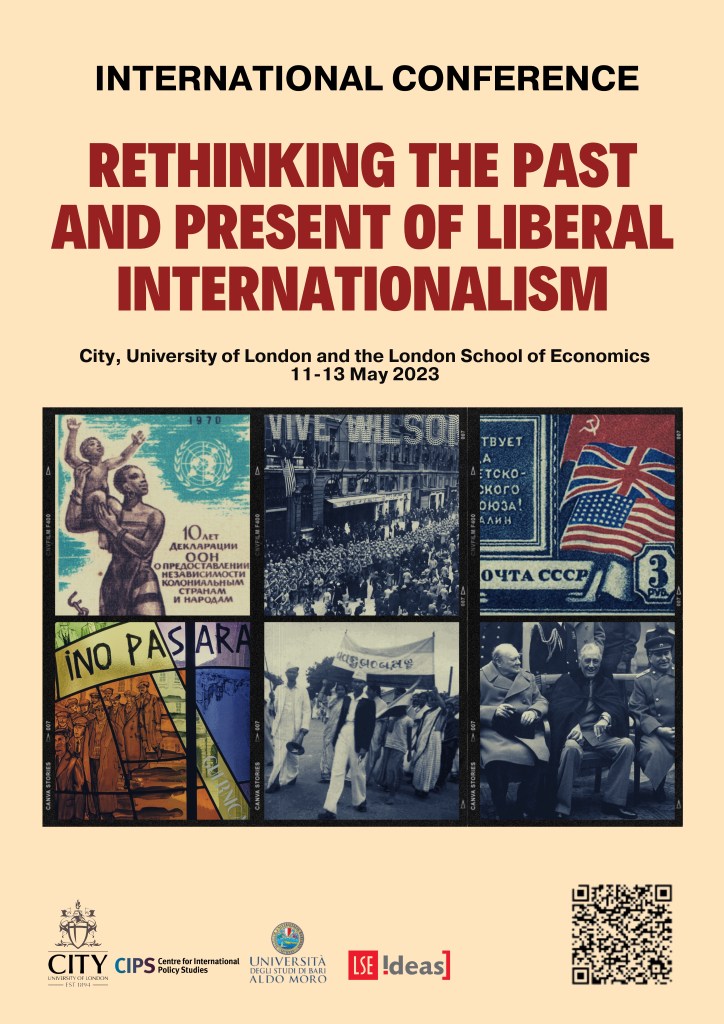
We are holding an international conference open to academics, staff and students. Please find the information here and below.
Conference Description
In recent years there is a surge in scholarly debates on the origins, transformations, legacies, and applications of liberal internationalism. Although there is no consensus on the term and its analytical frame of reference, most historians trace the emergence of liberal internationalist ideology in anglophone debates on international order during the nineteenth and twentieth centuries.
More recently, the language of liberal internationalism has been redeployed by IR scholars as a remedy to the crisis of western liberal democracy. The time seems ripe to revisit the concept of liberal internationalism and rethink its multiple pasts and presents.
To what extent can one speak of a coherent “liberal internationalist” zeitgeist? What does “liberal internationalism” mean in different periods and in different contexts? Are there non-western liberal internationalist traditions? How has empire and nationalism shaped liberal and internationalist imaginaries? What sense to do we make of binary categories such as idealism/realism, internationalism/isolationism that have shaped the debate on liberal international institutions and politics?
The conference will bring together historians, IR scholars and political theorists to survey the field of liberal internationalism and sketch out future research directions.
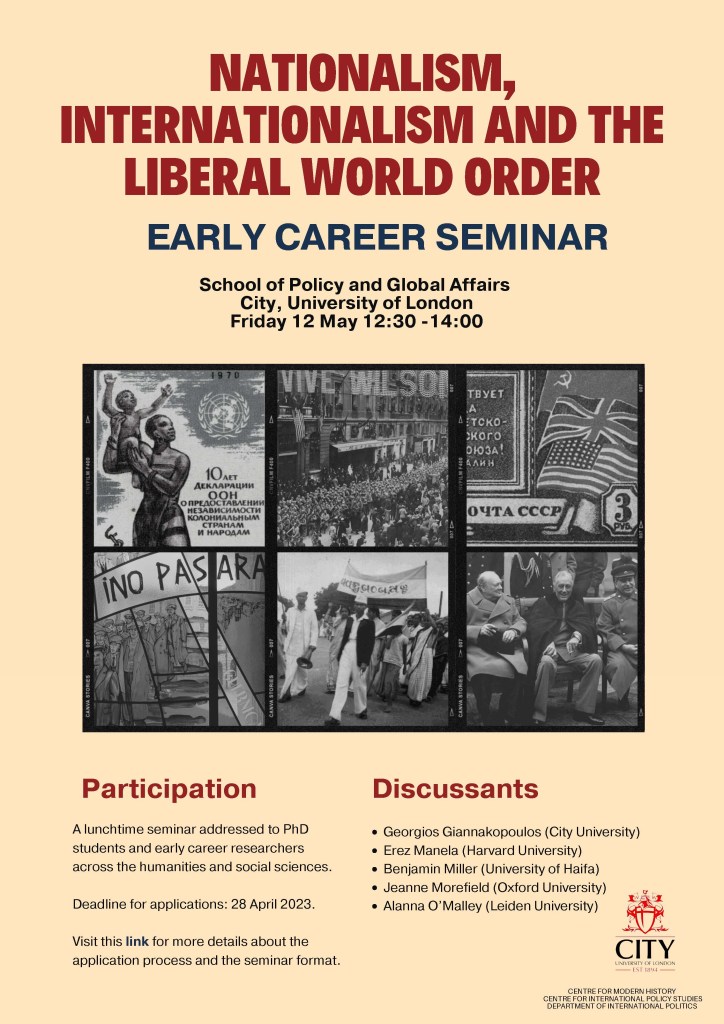
Early Career Seminar
During the conference, there will be a lunchtime Early Career Seminar (on 12th May, 12:30 – 14:00) addressed to PhD students and early career researchers across the humanities and social sciences. If you wish to present, please send a short description of your project and CV in one page to Begum.Zorlu.2@city.ac.uk by 28 April 2023. Download the seminar flyer [PDF].




 Begum Zorlu