While local politicians across Europe have spoken out against the imprisonment of Istanbul Mayor Ekrem İmamoğlu and the broader trend of democratic backsliding in Turkey, national leaders have largely remained silent, preferring to maintain ongoing cooperation with Ankara.
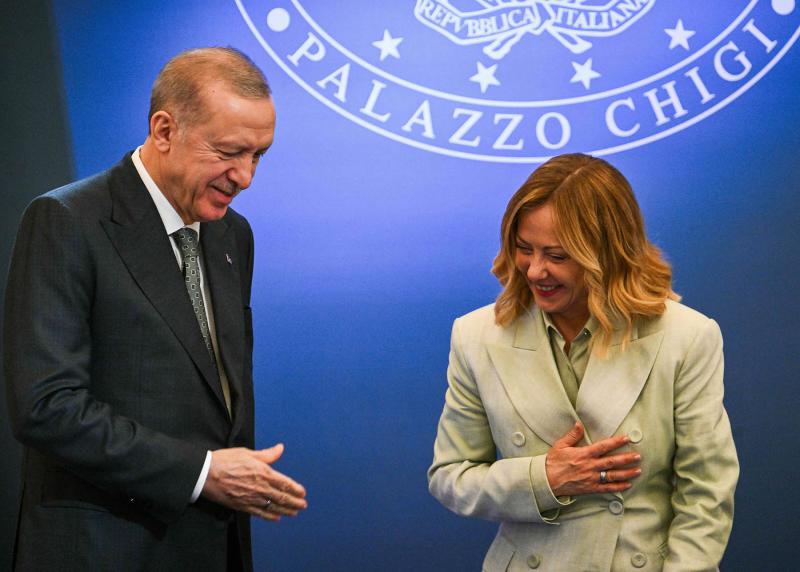
Photo: AFP
More than 50 days have passed since the arrest of Istanbul’s popular mayor, Ekrem İmamoğlu. Following his historic victory in the 2019 Istanbul mayoral election, İmamoğlu, a member of the Republican People’s Party (CHP), has become one of the strongest challengers to President Recep Tayyip Erdoğan’s political dominance. His victory not only marked the end of Erdoğan’s Justice and Development Party (AKP) ‘s decades-long control over Istanbul but also represented a larger quest for democratic reform. In light of his growing popularity, İmamoğlu has faced persistent political and legal pressure, which many perceived as part of a broader strategy to marginalise opposition voices.
In March 2025, İmamoğlu was finally arrested on multiple charges, including corruption and alleged connections to the Kurdistan Workers’ Party (PKK). This came just days before the CHP was set to nominate him as its candidate for the 2028 presidential elections. At the same time, Istanbul University revoked his degree, a constitutional requirement for presidential candidates. The arrest led to widespread protests in major Turkish cities, while over 100 CHP-affiliated officials, municipal employees, and thousands of students and protestors were also arrested.
Civil society and local governments in Europe have raised their voices against this new authoritarian step taken by the AKP government. In an unprecedented show of solidarity, dozens of European mayors and municipal leaders have issued joint statements and videos condemning the arrest. The declarations called for İmamoğlu’s immediate release and urged European institutions to take urgent action to defend democratic freedoms in Turkey.
The Council of Europe labelled the arrest politically driven and a danger to democracy. The Parliamentary Assembly of the Council of Europe called for his swift release, the dismissal of charges, the reinstatement of his degree, and an end to the repression against the protesters. The Congress of Local and Regional Authorities similarly condemned the arrest, describing it as an assault on political pluralism and the will of Istanbul’s electorate.
While the Council of Europe, some European politicians, members of the European Parliament, and local actors actively mobilised against the Turkish government’s authoritarian actions, political leaders in key Western nations remained notably restrained. A relative exception was German Chancellor Scholz, who explicitly condemned İmamoğlu’s detention, deeming it a setback for democratic principles and calling on political elites to cease politically motivated prosecutions. France also, through its Foreign Ministry, issued a public statement framing it as a threat to democracy. Yet overall, European leaders’ reactions were often muted or limited to generic expressions of concern, lacking the urgency, action, and clarity needed.
As the nationwide protests against the arrest began, followed by harsh crackdowns from security forces, CHP leader Özgür Özel expressed his disappointment with Europe’s weak political reaction, specifically highlighting that the silence from Keir Starmer and the British Labour Party is “really hard to understand.” This sentiment was intensified by issues surrounding press freedom and digital censorship, such as the deportation of Mark Lowen, a BBC journalist covering the protests. At the same time, platform X (formerly Twitter) was reported to be blocking opposition accounts in Turkey. Despite the alarming increase in repression, UK officials and some other European states have not issued any significant high-level response to the situation.
Erdoğan Turned Strategic Leverage into Political Immunity
Erdogan’s success in positioning Turkey as a key regional power has significantly altered the West’s response to democratic backsliding within the country. Turkey has become deeply embedded in Europe’s strategic considerations, notably through its role as a mediator and drone technology supplier in Russia’s war on Ukraine. Some commentators have even suggested that Turkish troops could participate in a future Ukraine peacekeeping mission. It has also sold drones to Poland and Croatia. Its role in managing migration, particularly through the 2016 EU-Turkey agreement, is viewed by European leaders as essential to preserving domestic political stability. These dynamics have not silenced Western leaders entirely, but it has produced a clear reluctance to challenge the regime over its authoritarian measures.
Turkish arms companies are increasingly being considered in a more in-depth manner for European defence strategy. Another key example is the emerging partnership between Baykar (the Turkish arms company owned by Erdoğan’s son-in-law) and Italy’s Leonardo. Framed as a “win-win” outcome by Baykar at the Turkey–Italy Summit, the deal marks a significant step toward integrating Turkish defence technology into Europe. The agreement, endorsed politically by Meloni and Erdogan just a month after İmamoğlu’s arrest, outlines joint work on UAVs, using Italian infrastructure as an entry point. This collaboration not only enhances Turkey’s standing but also secures Baykar’s presence in the European market, fostering further defence collaboration with the political regime in Turkey.
In this context, Turkey is emerging as a more self-assured player during uncertainties related to ongoing US support under Trump, and the wars in the Middle East and Ukraine. Erdogan, in particular, has adopted a notably confident tone, casting Turkey as essential to Europe’s future. “It is becoming increasingly impossible for a Europe without Turkey to continue its existence as a global actor,” he asserted, emphasising that “European security without Turkey is unthinkable.” These remarks illustrate a strategic messaging strategy that utilises Turkey’s military importance and growing role in regional diplomacy to seek recognition and influence within Europe’s changing security landscape. Nonetheless, the Turkish regime plans to set the terms of this partnership: while it offers cooperation, it also demands silence on its internal authoritarian practices, resembling the transactional relationships Europe previously had with regimes like Mubarak’s Egypt.
To sum, European reactions reflect strategic interests and security anxieties rather than a solid response to democratic backsliding in Turkey. The case of İmamoğlu exemplifies how pragmatism is here to stay in the West’s relationship with Turkey.
Begum Zorlu is an ESRC research fellow at City St George’s, University of London; Convenor of the PSA Turkish Politics Specialist Group and Content Producer at SES Equality and Justice Platform.
See the article featured at PSA Blog.
 Begum Zorlu