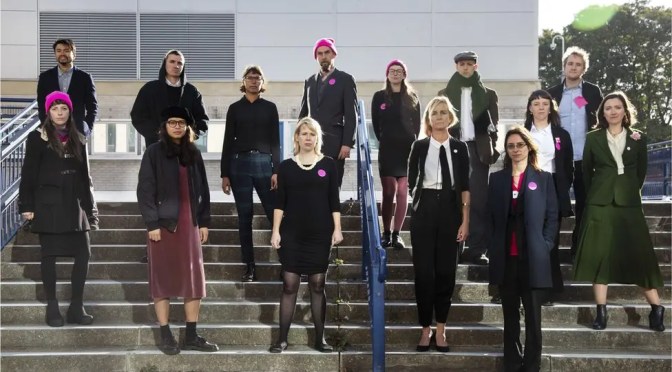

On the night of 28 March 2017, fifteen activists breached the perimeter fence at Stansted Airport, ran onto the apron, and locked themselves to a plane. The aircraft had been chartered to remove 60 people to Nigeria, Ghana, and Sierra Leone. According to the protesters, which is now known as the Stansted 15, the individuals on board were at risk of serious harm and even death if deported. That is why they needed to engage in direct action.
Their intervention delayed the flight and, in several cases, allowed passengers more time to pursue legal appeals. One man, later granted the right to remain in the UK, said that without their action, he would have missed his daughter’s birth and been deported without his (ultimately successful) case being heard.
The authorities saw it differently. In 2018, the Stansted 15 were convicted of endangering the safety of an aerodrome under section 1(2)(b) of the Aviation and Maritime Security Act 1990—a serious offence originally drafted to address terrorist threats, not peaceful protest. The law covers the unlawful and intentional disruption of aerodrome services “in such a way as to endanger or be likely to endanger” safe operations or the safety of persons.
Critics argue that the charge was grossly disproportionate and designed to intimidate campaigners. Helen Brewer, one of the convicted, described the prosecution as “an unprecedented use of terror law against peaceful protesters who acted to prevent harm,” adding that “the real crimes” were the UK government’s use of “brutal, inhumane and barely legal deportation flights.”
Deportation Flights
Mass deportations by charter flight are a largely hidden feature of the UK’s immigration system. In 2016 alone, 10,706 people were forcibly removed; one in seven of those deportations took place via secretive night-time charters.
Critics argue that as entire flights are often booked for individuals of the same nationality, this raises concerns about racial discrimination and collective punishment.
Exposing Injustice and State Repression
The Stansted 15’s case also raises broader questions about the right to protest in the UK. Articles 10 and 11 of the European Convention on Human Rights (ECHR) protect freedom of expression, assembly, and association, including peaceful demonstrations.
It also challenges the conventional moral order, recasting the state as the perpetrator and the activists as those upholding justice. As one supporter put it, the group sought to stop “the real crime being committed,” reframing civil disobedience as a moral responsibility rather than a legal transgression. Their legitimacy rests on humanitarian necessity, framing their intervention as an ethical imperative. This is a case that suggests certain circumstances compel action beyond the boundaries of the law. It also strips away the sanitised language that often surrounds state deportations, replacing it with stark descriptions like “secretive night-time charters” and “brutal, inhumane and barely legal deportation flights.” In doing so, it makes visible the structural harm usually obscured by official rhetoric.
 Begum Zorlu